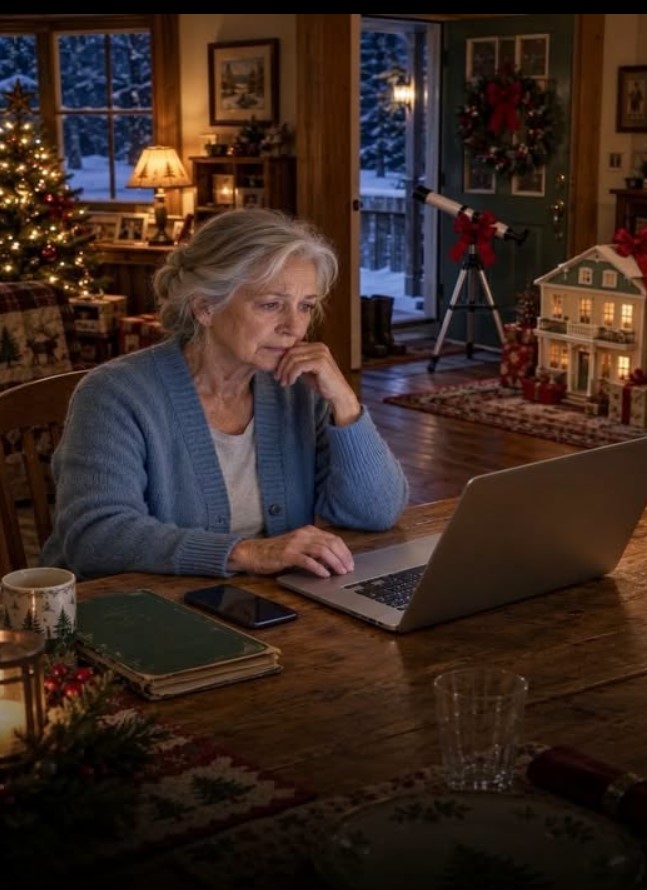
“Mom, the plans have changed,” Benjamin texted at 6:18 p.m.
I was sitting at my kitchen table, fastening the last button of my navy dress, when his message appeared.
I smiled at first. Perhaps dinner had been moved to another evening. Perhaps Genevieve had forgotten something, or perhaps they had decided to eat at a different restaurant.
Then another message arrived.
“You weren’t invited. My wife doesn’t want you there.”
For several seconds, I simply stared at the screen.
At seventy-seven, I had learned that life could surprise you in many ways. I had buried a husband, raised a son, survived lonely holidays, and discovered that growing older sometimes meant becoming invisible to the very people you had spent your life loving.
But I had never expected my own child to exclude me so casually after everything I had done for him.
The navy dress was one I had bought especially for the occasion. I had spent the afternoon ironing it carefully, smoothing the fabric with my hands until every crease had disappeared. My pearl earrings, a gift from my late husband Thomas on our fiftieth wedding anniversary, lay beside my handbag.
Rain tapped against the kitchen window.
The kettle had gone cold, and my tea sat untouched beside a folded napkin.
On the mantel was Thomas’s photograph. He was smiling in it, his arm around my shoulders, his eyes carrying that familiar expression of quiet amusement.
I picked up the silver frame.
“You would know what to say,” I whispered.
But Thomas had been gone for three years, and I was alone with a phone displaying the cruelest message my son had ever sent me.
Beside his photograph sat a glossy brochure for Benjamin and Genevieve’s townhouse. Benjamin had mailed it to me in March, shortly after they moved into the property.
The brochure showed bright rooms, polished floors, white trim, and couples laughing around a beautifully arranged dining table.
“For you too, Mom,” Benjamin had told me when he first showed me the photographs.
“We want you to feel like this is your home as well.”
I had believed him.
I had believed him because mothers often keep believing long after the evidence tells them they should stop.
I had believed him because I remembered the little boy who used to run toward me whenever he scraped his knee, the teenager who once cried in my kitchen after his first serious heartbreak, and the young man who held my hand at his father’s funeral.
I had believed that the love between us was something money could never change.
Now I wasn’t so sure.
Genevieve had never needed to shout to make me feel unwelcome.
Her cruelty came wrapped in perfect manners and carefully chosen words.
“Your mother is lovely, Benjamin,” she had once said while sipping an expensive coffee I had paid for. “She means well, but she doesn’t always understand how things work in our world.”
I had laughed politely.
It was the kind of laugh I had perfected over the years, the one that allowed other people to say hurtful things without having to face the discomfort of my reaction.
I had told myself that Genevieve was young, that marriage required compromise, and that keeping peace was worth swallowing a little pride.
But peace that requires one person to remain silent is not really peace.
It is merely resentment waiting for an opportunity to speak.
I looked at the clock.
6:20 p.m.
I read Benjamin’s message again.
Then I stood, walked to the old wooden desk in the corner, and opened the bottom drawer.
Inside was a folder marked BENJAMIN.
For fifteen years, I had kept every record of the help I had given my son. I never intended to use those papers against him. I kept them because I was organized, because Thomas had taught me to maintain accurate financial records, and because I believed that one day I might need to explain where our money had gone.
I never imagined that the day would come when I would need those records to remind myself how much I had sacrificed.
There were college tuition payments, insurance premiums, mortgage contributions, utility bills, country club dues, emergency transfers, and expenses that had somehow transformed from temporary assistance into permanent obligations.
There was even a $2,800 preschool payment for my granddaughter, Sophie.
I had paid for home repairs that were supposedly urgent, business expenses that were supposedly temporary, and household bills that Benjamin had promised to take over the following month.
Somewhere along the way, I had stopped asking when the help would end.
I had simply continued giving.
The previous year alone, I had contributed $93,600 toward Benjamin’s expenses.
Ninety-three thousand six hundred dollars.
I had repeated that number to myself when Clara, my longtime bank representative, first helped me organize my accounts. Even then, I had struggled to understand how so much money had left my accounts without my fully appreciating the scale of it.
I had never thought of myself as wealthy.
Thomas and I had worked for decades, saved carefully, and lived within our means. We had raised Benjamin in a modest house and taught him that money represented time, effort, and responsibility.
After Thomas died, I had kept our home, our savings, and the little garden he loved.
I had believed I was using my savings wisely by helping my son build a secure future.
Instead, I had helped him build a lifestyle he could not afford.
At 6:47 p.m., my phone vibrated again.
This time, it was Sophie.
“Grandma, are you coming?”
My eight-year-old granddaughter had been talking about the dinner for weeks. She had told me about the decorations she wanted to help her mother arrange and the dessert she hoped I would bring.
I stared at her message until my eyes began to sting.
She was too young to understand the distance her parents had placed between us.
I typed carefully.
“Not tonight, sweetheart. I love you very much.”
A moment later, three little heart emojis appeared on my screen.
I put the phone down.
Then I opened my desk drawer again and reached for the folder containing my bank information.
I did not call Benjamin.
I did not call Genevieve.
And I certainly did not ask them to reconsider.
Instead, I called my bank.
The representative who answered asked me to verify my identity. I gave her my date of birth, the required account information, and my security phrase.
Then she asked, “How can I help you this evening, Mrs. Kelley?”
“I need to review the recurring payments connected to my son, Benjamin Kelley. I also need to cancel any voluntary authorizations that I am entitled to revoke.”
She paused.
“Of course. Are you concerned about a particular payment?”
“No. I am concerned about all of them.”
Her tone became more serious.
“We can arrange a full review. Some payments may be canceled immediately, while others might require additional steps depending on the agreement. Would you like us to begin?”
“Yes, please.”
As we went through the accounts, I began to understand the extent of the arrangements.
There were payments I remembered clearly and others I had nearly forgotten. Some were direct transfers. Others were automatic debits that had continued long after their original purpose had disappeared.
I asked the representative to flag anything unfamiliar and explain which arrangements I could stop without affecting my own financial obligations.
I was not going to make a reckless decision out of anger.
I was going to take control of my money.
At 7:03 p.m., I sent Benjamin one final message.
“Then you and your wife can start paying your own way.”
I pressed send.
Then I turned off my phone, removed my pearl earrings, and placed them beside Thomas’s photograph.
For the first time in fifteen years, I did not spend the evening wondering how I could make my son happy.
I spent it asking myself why I had accepted so little in return for so much.
By the following morning, I was sitting across from Clara at First National Bank.
She had known our family for twenty-two years. She had helped Thomas establish his retirement accounts, guided me through the paperwork after his death, and sent flowers when I lost him.
She never treated me as though I were too old to understand my own affairs.
That morning, she placed a thick stack of statements on the desk between us.
“Are you certain you want to proceed, Mrs. Kelley?” she asked gently.
I looked at the papers.
Mortgage contributions. Insurance. Utilities. Tuition. Subscriptions. Membership fees. Business-related transfers.
One hundred seventy-four recurring payments or authorizations had to be reviewed.
I felt warmth spread across my face, but it was not embarrassment.
It was understanding.
“It rarely happens all at once,” Clara said quietly.
“No,” I answered. “It never does.”
A person rarely wakes up one morning and discovers that an entire relationship has become unbalanced. It happens gradually. One emergency becomes two. One favor becomes a habit. One promise becomes a permanent expectation.
Eventually, you stop noticing how much you give because everyone around you has learned to expect it.
I signed the necessary forms to cancel the voluntary arrangements I no longer wished to maintain, while Clara helped me identify the payments that required further review.
When I returned home, I made tea in my finest cup.
Not the chipped one I used every morning.
Not the one I always chose because I thought the nice things should be saved for company.
I sat beside the window, wrapped both hands around the warm cup, and watched the rain disappear from the garden.
At 11:26 a.m., my phone began ringing.
The first call came from Benjamin.
Then another.
Then Genevieve.
I let them ring.
A few minutes later, I heard tires crunching over the wet gravel outside.
I pulled back the curtain.
Genevieve stepped out of the car first, wearing a spotless cream-colored coat. Benjamin followed, gripping his phone so tightly that his knuckles had turned white.
Then I saw a little girl holding a yellow umbrella.
Sophie.
But she was not looking at her parents.
She was looking at my front door.
Beside her stood Patricia, Genevieve’s mother, whom I had not seen in nearly three years.
Patricia wore a gray wool coat and held a thick manila envelope against her chest. Her eyes were swollen, as though she had spent the morning crying.
Benjamin said something to Sophie.
She shook her head.
Then she ran toward my house.
The doorbell rang twice.
I opened the door before the second ring had finished.
“Grandma!”
Sophie threw her arms around my waist so fiercely that I had to grip the doorframe to steady myself.
“What happened, sweetheart?”
She pressed her face against my dress.
“Daddy said you didn’t want us anymore.”
For a moment, I could not speak.
Then I knelt carefully and held her face between my hands.
“Oh, sweetheart. That is not true. I will always want you in my life.”
She began to cry.
I pulled her close and felt her small shoulders shake against me.
Behind her, Benjamin stood on the porch, unable to meet my eyes.
Genevieve looked impatient, while Patricia held the envelope tighter against her chest.
I opened the door wider.
“Come inside,” I said. “All of you. But we are going to speak honestly today.”
Benjamin lowered his head.
Genevieve hesitated before crossing the threshold.
For years, I had made room for everyone in my family, even when they made me feel as though there was no room for me.
That morning, something had changed.
They were entering my home on my terms.
And I would no longer pretend that love meant allowing people to hurt me without consequence.
The Envelope on My Kitchen Table
Sophie settled on the sofa with her yellow umbrella beside her. I gave her a blanket and asked whether she wanted some hot chocolate.
She nodded.
While I prepared it, I heard Patricia speaking quietly to Benjamin in the hallway.
“You cannot keep doing this,” she said.
“You don’t understand,” Benjamin replied.
“I understand more than you think.”
When I returned to the kitchen, Patricia placed the envelope beside my folder.
“Margaret, there is something you need to know.”
I looked at her.
“What is it?”
She took a deep breath.
“Benjamin and Genevieve have been in serious financial trouble for some time. I knew about some of it, but I did not understand how far things had gone until recently.”
Benjamin stepped forward.
“Patricia, please.”
She turned toward him.
“No. She deserves to know.”
Inside the envelope were bank statements, copies of emails, and several pages of financial documents. Patricia explained that she had become concerned after Genevieve asked her to help arrange another loan.
At first, she had assumed the couple were dealing with ordinary business difficulties.
Then she discovered that information about my finances had been included in documents she had not authorized.
I slowly examined the papers.
One page contained my name, my home address, and details about my investment accounts.
Another referred to a financial authorization I did not remember signing.
My fingers became cold.
“What is this?”
Benjamin pulled out a chair but remained standing behind it.
“Mom, I can explain.”
“Then explain.”
He glanced at Genevieve.
I noticed the look.
For years, I had watched my son search his wife’s face before answering questions that involved me. I had told myself that it was simply a marriage, that couples made decisions together, and that I should not interfere.
This time, I refused to look away.
“Explain it to me, Benjamin. Not to your wife. Not to Patricia. To me.”
He swallowed.
“The business wasn’t doing well. We had invested in a property development, and things went wrong. We thought we could recover the losses if we secured additional financing.”
“Using my financial information?”
“We thought it would help demonstrate that the arrangement was secure.”
“Did I agree to this?”
He said nothing.
I looked at the documents again.
“Did I sign this authorization?”
Benjamin rubbed his forehead.
“I gave them a copy of your signature from an old form. I told them you were considering helping me manage some financial matters.”
The kitchen seemed to become very quiet.
“You told them I had agreed when I had not?”
“I thought I could get everything sorted out before it became a problem.”
“That is not an answer.”
He looked down.
“No. You hadn’t agreed.”
I placed the document on the table.
For fifteen years, I had given my son money because I wanted him to have a secure future. Now I was learning that he had used my trust to make decisions I had never approved.
The betrayal was not simply financial.
It was personal.
He had taken away my ability to make an informed choice about my own life.
“Why didn’t you come to me and tell me the truth?” I asked.
Benjamin’s eyes filled with tears.
“Because I was afraid.”
“Of what?”
“Of disappointing you.”
I stared at him.
“You thought I would be disappointed if you told me your business was failing, so you decided to involve my finances without my permission?”
He looked ashamed.
“I know how it sounds.”
“It sounds exactly like what you did.”
Genevieve finally spoke.
“We were trying to protect our family.”
I turned toward her.
“By keeping me in the dark?”
“We had a plan.”
“A plan that depended on my money and my signature, without my informed consent?”
She folded her arms.
“You don’t understand the pressure we were under.”
“Then you should have explained it to me before making decisions that affected me.”
She looked away.
For the first time, I understood that the woman who had spent years making me feel inferior was frightened of being exposed as someone who could not maintain the life she wanted people to admire.
It did not excuse her actions.
But it explained why she had treated my help as both an embarrassment and an entitlement.
Patricia sat down beside the envelope.
“I should have come to you sooner,” she admitted.
“Why didn’t you?”
“Because I hoped they would fix it before anyone else got hurt. I thought I could persuade them to stop.”
She looked toward the living room.
“Then Sophie overheard an argument last night. She heard enough to become frightened, and this morning she told me what her father had said about you.”
My heart tightened.
“What exactly did she hear?”
Patricia hesitated.
“She heard Genevieve say that you would probably forgive Benjamin because you always had before.”
I closed my eyes.
That sentence hurt more than I expected.
Not because it was entirely untrue, but because it revealed how predictable my forgiveness had become.
They had stopped seeing it as a gift.
They had started treating it as a guarantee.
I looked at my son.
“Benjamin, I love you. That has never been in question. But love does not give you permission to use my money, misrepresent my consent, or make decisions about my future without me.”
He nodded, tears slipping down his face.
“I know.”
“No,” I said quietly. “You understand now that the consequences have arrived. I need you to understand what you did, even if the consequences were not what you expected.”
Genevieve began to cry.
“I never wanted this to happen.”
I looked at her for a long moment.
“Neither did I.”
Then I stood.
“I am going to speak to a lawyer. The bank will review the records. Any disputed documents will be handled through the proper channels. Until that process is complete, neither of you will have access to my financial information or permission to make decisions on my behalf.”
Benjamin looked alarmed.
“Are you going to report us?”
“I am going to protect myself and find out exactly what happened. I will not make promises about the outcome before the facts are established.”
“Mom, please. I don’t want this to destroy our family.”
I felt the familiar urge to comfort him.
It was almost automatic. Even after everything, part of me wanted to cross the kitchen, take his face in my hands, and tell him that everything would somehow be all right.
But I had done that too many times.
I had rescued him from discomfort before he could learn from it.
This time, I remained where I was.
“You were willing to risk my security to protect your lifestyle,” I said. “You cannot ask me to protect you from the consequences of that choice.”
He lowered his head.
For once, there was nothing I could say that would make the truth less painful.
The First Boundary
That afternoon, I met with an independent lawyer who specialized in financial disputes and elder financial protection.
She reviewed the documents, explained my options, and helped me understand which steps needed to be taken immediately.
She advised me to preserve all records, secure my accounts, notify the relevant financial institutions, and avoid signing anything presented by Benjamin or Genevieve until the disputed matters had been reviewed.
She also reminded me that canceling voluntary household payments was separate from resolving any possible unauthorized financial transactions.
I appreciated her honesty.
For years, I had heard promises that things would work out.
Now I needed facts, not reassurance.
Over the following days, the bank began reviewing the transactions. The lawyer requested copies of the relevant records and helped me establish stronger protections around my finances.
Some payments were stopped. Others required further review. I made sure my own bills, insurance, and living expenses remained covered.
I did not want revenge.
I wanted clarity.
And I wanted to know that the money Thomas and I had spent a lifetime saving would remain available for my own future.
Benjamin called repeatedly.
At first, his messages were about the financial arrangements.
“Mom, the mortgage payment is due.”
“Mom, the insurance company needs an answer.”
“Mom, we have to discuss what happens next.”
I did not respond immediately.
Then, several days later, a different message arrived.
“Mom, I am sorry for what I did. I know that isn’t enough. I just want to talk to you when you’re ready.”
I read it twice.
I wanted to believe him.
But I had learned that apologies were only the beginning of accountability, not proof of it.
I replied with one sentence.
“When you are ready to tell the whole truth, we can talk.”
For the first time in years, I did not send money to accompany my words.
The Dinner That Never Happened
Two weeks later, Sophie came to visit with Patricia.
Benjamin had asked whether he could bring her himself, but I told him I wanted Sophie to have time with me without feeling caught between her parents and her grandmother.
He agreed.
When Sophie arrived, she carried a drawing she had made at school. It showed a small house with a red roof, a tree beside the front door, and three people holding hands.
One figure had silver hair.
“That is you,” she explained proudly.
“And who are the other two?”
“Me and Grandpa Thomas.”
My throat tightened.
“You remember Grandpa?”
She nodded.
“You showed me his pictures. You said he liked gardening.”
“He did.”
She gave me the drawing.
“I wanted you to have it because you looked sad.”
I held the paper carefully.
Children often notice things adults try to hide. Sophie had seen my sadness, even when I had smiled through it.
“Thank you, sweetheart. I love it.”
She sat beside me on the sofa.
“Grandma, are you still angry with Daddy?”
I took a moment to answer.
“I am hurt by what he did. But I love him, and I love you. Those things can all be true at the same time.”
“Does that mean he can’t come here anymore?”
“No. It means that when he comes, we need to treat one another honestly and respectfully.”
She considered this.
Then she asked, “Will you still come to my school play?”
The question nearly broke my heart.
“Of course I will, if your parents invite me and the arrangements are made properly.”
She leaned against me.
“Mommy said you might not want to see us anymore.”
I gently brushed her hair away from her face.
“Sweetheart, grown-ups sometimes say things when they are upset. But you never have to earn my love, and you never have to choose between loving your parents and loving me.”
She wrapped her arms around me.
I held her close, realizing that whatever happened between Benjamin and me, I could not allow Sophie to become responsible for repairing it.
She was a child.
She deserved to be a child.
She deserved to know that family love should never be used as a bargaining chip.
When Patricia returned to collect her, Sophie asked whether she could visit again the following weekend.
“Of course,” I said.
After they left, I placed her drawing on the mantel beside Thomas’s photograph.
For the first time since receiving Benjamin’s message, I smiled without forcing myself to do it.
Six Months Later
The financial review took longer than I had expected.
There were documents to examine, accounts to reconcile, and difficult conversations that could not be avoided. Benjamin and Genevieve had to face the reality of their debts and the decisions that had brought them there.
They could no longer depend on my money to make every problem disappear.
They had to consult financial professionals, reconsider their expenses, and make difficult choices about the business and their home.
Some arrangements were resolved through ordinary financial procedures. Other disputed matters required further investigation. I left those issues to the professionals handling them rather than allowing family pressure to determine the outcome.
I also made changes to my own life.
I reviewed my estate plans, updated my account protections, and ensured that my important documents were held securely. I spoke with my lawyer about how I wanted my finances managed if I ever needed assistance in the future.
Most importantly, I stopped treating my savings as an emergency fund for everyone except myself.
I began using some of my money for things I had postponed for years.
I replaced the old washing machine that Thomas had always promised we would eventually upgrade. I booked a short trip to the coast with two friends. I joined a local gardening group and bought the rosebushes I had admired every spring but never purchased because I thought the money might be needed elsewhere.
I discovered that I enjoyed being generous when generosity was freely chosen.
I enjoyed giving Sophie a book because I wanted to see her face light up.
I enjoyed taking a friend to lunch without calculating whether the expense would affect someone else’s bills.
And I enjoyed sitting in my own home without feeling that every dollar I possessed already belonged to another person.
Benjamin’s first real apology came in person.
He arrived on a Saturday afternoon carrying no paperwork and asking for no money.
He looked tired. His expensive coat had been replaced by an ordinary jacket, and the confident expression he once wore had disappeared.
“Can I come in, Mom?”
I opened the door.
“Yes.”
He sat at the kitchen table where the folder marked BENJAMIN had once lain open between us.
For several moments, neither of us spoke.
Then he said, “I have been thinking about what you told me.”
I waited.
“I used to tell myself that you wanted to help me. And you did. But I turned that into an excuse to expect help whenever I needed it.”
He rubbed his hands together.
“When the business started failing, I was ashamed. I didn’t want you to know I had made a mess of things. I thought I could fix everything before you found out.”
“And when you couldn’t?”
“I kept going.”
He looked at me.
“I knew you might refuse to help if I told you the truth. Instead of respecting that, I tried to find a way around it.”
His voice broke.
“I made you feel as though you had to pay for a place in my life. I don’t know how to forgive myself for that.”
I felt tears gathering in my eyes, but I did not rush to comfort him.
“What are you going to do differently?”
He seemed to have expected a different question.
“I am working with an adviser to deal with the debts. We have cut our expenses, and I am looking for additional work. Genevieve and I are discussing what we can realistically afford.”
He paused.
“And I understand that you are not going to pay for it.”
“No,” I said. “I am not.”
He nodded.
“I know.”
For the first time, he did not argue.
Then he said something I had waited years to hear.
“You should never have had to prove that you were worth inviting to your own son’s dinner.”
I looked down at my hands.
“No,” I whispered. “I shouldn’t have.”
He reached across the table, then stopped before touching my hand.
“Can I ask you something?”
“Go ahead.”
“Do you think we can ever have a normal relationship again?”
I considered the question.
“I don’t know what normal will look like for us. But we can try to build something honest. That will take time, and it will require more than apologies.”
“I understand.”
“Do you?”
He looked at me for a long moment.
“I am beginning to.”
I nodded.
It was not a perfect reconciliation. There was no dramatic embrace, no promise that everything would be forgotten, and no sudden return to the relationship we had once shared.
But there was something I had not heard from him in a very long time.
Accountability.
And for now, that was enough to allow a small door to open.
The Invitation
The following spring, Sophie had a school performance.
Benjamin called me a week beforehand.
“I wanted to make sure you knew about the play,” he said. “Sophie has been practicing for months. She really wants you there.”
“Thank you for telling me.”
There was a pause.
“And, Mom?”
“Yes?”
“You are invited. Not because you paid for anything. Not because we need help. Because you are her grandmother, and I want you there.”
I closed my eyes.
The words were simple.
They should never have been extraordinary.
But after everything that had happened, I understood how much they mattered.
“I would love to come,” I told him.
On the evening of the performance, I wore a blue dress and my pearl earrings.
I had kept them in their small velvet box after that terrible night, unable to decide whether seeing them would hurt too much.
Now, fastening them in front of the mirror, I thought of Thomas.
I imagined what he might have said if he could have seen me.
Perhaps he would have smiled and told me that I looked beautiful.
Perhaps he would have reminded me that being a mother did not mean surrendering every part of myself.
I arrived at the school shortly before the performance began.
Benjamin was standing near the entrance with Sophie. When she saw me, she ran across the hallway and threw her arms around me.
“You came!”
“I promised, didn’t I?”
She took my hand and led me toward the auditorium.
Benjamin followed.
Genevieve was already seated near the front. She stood when we approached.
For a moment, neither of us knew what to say.
Then she looked at my earrings.
“They’re beautiful,” she said quietly.
“Thank you. My husband gave them to me.”
She nodded.
“I know.”
The old tension remained between us. We had not suddenly become friends, and I was not ready to pretend that the past had disappeared.
But she moved her bag from the empty chair beside her.
“This seat is yours, Margaret.”
I looked at her.
“Thank you.”
I sat down.
No one asked me to pay for the tickets. No one mentioned the mortgage or the business. No one treated my presence as an inconvenience.
For that evening, I was simply a grandmother watching her granddaughter perform.
When Sophie stepped onto the stage, she scanned the audience until she found me.
Then she smiled.
It was a small smile, but I recognized the happiness behind it.
I smiled back.
And when the performance ended, I stood with everyone else and applauded until my hands hurt.
Outside the school, Sophie ran toward me with a paper flower she had made.
“This is for you, Grandma.”
I accepted it carefully.
“I will treasure it.”
She slipped her hand into mine.
“Can I come to your house next weekend?”
“Of course.”
“And can we bake cookies?”
I laughed.
“As many as you like.”
Benjamin stood a few steps away, watching us.
For a moment, I saw the little boy he had once been, the child who used to sit on my kitchen counter while I baked and steal pieces of dough when he thought I wasn’t looking.
I still loved that boy.
But I was learning to love the man he had become without pretending that every choice he made was acceptable.
“Mom,” he said softly.
I turned toward him.
“Would you like to have dinner with us next Sunday? Just dinner. No occasion.”
I considered the invitation.
For years, I would have said yes immediately, afraid that hesitation might cost me another opportunity to see my son.
This time, I gave myself permission to think.
“Thank you for asking,” I said. “Let me check my plans, and I’ll let you know.”
He nodded.
“All right.”
There was no anger in his expression, only the quiet understanding that my time was mine to offer.
As Sophie and I walked toward my car, she began telling me about the songs she had practiced and the friend who had forgotten her lines.
I listened to every word.
The evening air was cool, and the sky was turning pink above the school roof.
I thought of the woman I had been on the night of the townhouse dinner, standing alone in her kitchen with a navy dress and a phone full of hurtful words.
I wished I could reach back through time and tell her something.
I would tell her that she was not foolish for loving her son.
She was not weak for helping him.
And she was not a bad mother for finally saying no.
She had simply forgotten that her life mattered, too.
Now she was remembering.
That night, I returned home and placed Sophie’s paper flower beside Thomas’s photograph.
Then I took out my old notebook and wrote a few words on the first blank page.
Love freely. Give willingly. Never confuse being needed with being valued.
I closed the notebook and switched off the lamp.
My home was quiet, but the silence no longer felt like rejection.
It felt like peace.
And at seventy-seven, after years of trying to earn a place in my own family’s life, I had finally learned something Thomas had understood all along.
The people who truly love you will not ask you to empty your life to prove that you care.
They will make room for you at the table.
And if they forget how, you are allowed to stand up, take your dignity with you, and build a life where your presence is welcomed—not purchased.