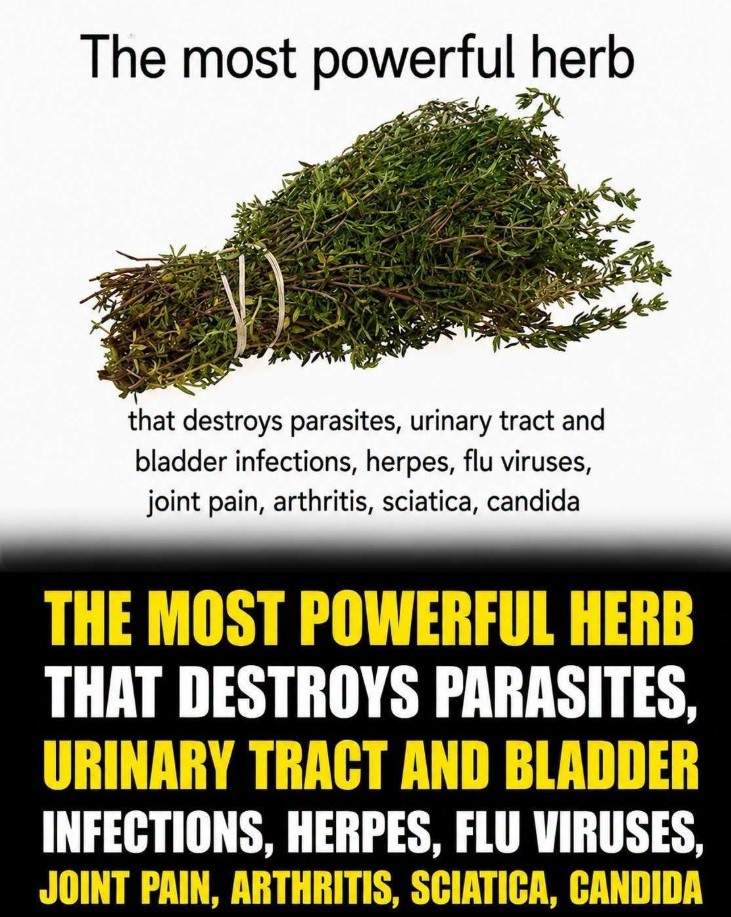
Social media is filled with eye-catching health claims, and one of the latest suggests that a single herb can eliminate parasites, cure urinary tract and bladder infections, fight herpes and flu viruses, relieve arthritis and sciatica, and even combat Candida. It’s an impressive list of promises, but it also raises an important question: can one plant truly accomplish all of that?
The image accompanying this claim features a bundle of fresh thyme, an herb that has been valued for centuries in traditional medicine and is well known for its culinary uses. Thyme contains natural compounds with antimicrobial and antioxidant properties, leading many people to wonder whether it deserves its reputation as a powerful healing herb.
While thyme is undoubtedly a nutritious and beneficial addition to a healthy diet, modern scientific research paints a more balanced picture than the dramatic headlines found online. Understanding what studies have actually discovered—and where evidence is still lacking—can help separate fact from fiction and allow people to make informed decisions about their health.
Meet Thyme: A Small Herb with a Long History
Thyme (Thymus vulgaris) is a fragrant herb native to the Mediterranean region. For thousands of years, it has been used in cooking as well as traditional herbal practices.
Ancient civilizations believed thyme promoted strength, purified the air, and supported overall wellness. Today, it remains a staple in kitchens around the world while also appearing in herbal teas, essential oils, cough syrups, mouthwashes, and dietary supplements.
Researchers have identified several active compounds within thyme, including:
- Thymol
- Carvacrol
- Rosmarinic acid
- Flavonoids
- Various antioxidants
These naturally occurring substances are responsible for many of the herb’s biological activities that scientists continue to investigate.
Why Thyme Attracts Scientific Interest
One reason thyme has gained attention is that laboratory studies have shown it possesses antimicrobial properties. Certain compounds found in thyme essential oil can inhibit the growth of some bacteria and fungi under controlled laboratory conditions.
However, it’s important to recognize that laboratory experiments do not automatically translate into effective treatments for diseases in humans. Many natural substances perform well in test tubes but fail to produce the same results inside the human body due to differences in dosage, absorption, metabolism, and safety.
This distinction is crucial when evaluating bold health claims.
Can Thyme Destroy Parasites?
One of the most common claims online is that thyme “destroys parasites.”
The scientific evidence does not currently support this statement as a proven treatment for human parasitic infections.
Some laboratory and animal studies suggest certain compounds in thyme may affect specific parasites under experimental conditions. Researchers continue exploring these possibilities, but there is currently insufficient high-quality clinical evidence showing that consuming thyme or thyme tea can eliminate intestinal parasites in people.
Human parasitic infections often require accurate diagnosis through laboratory testing and treatment with prescription antiparasitic medications.
Anyone experiencing persistent digestive symptoms should seek medical evaluation rather than relying solely on herbal remedies.
What About Urinary Tract Infections?
Urinary tract infections (UTIs) are among the most common bacterial infections worldwide.
Because thyme contains antimicrobial compounds, researchers have explored whether it might help inhibit bacteria associated with UTIs.
Although laboratory studies have produced encouraging findings, there is currently no strong clinical evidence demonstrating that thyme alone can cure an active urinary tract infection.
Most uncomplicated UTIs require proper medical evaluation, and many cases are successfully treated with antibiotics when appropriate.
Ignoring symptoms or delaying treatment can allow infections to spread to the kidneys, making prompt medical care especially important.
Does Thyme Fight Viruses Like the Flu or Herpes?
Claims that thyme destroys flu viruses or herpes viruses often exaggerate what research actually shows.
Some laboratory studies suggest that certain components of thyme essential oil possess antiviral activity against specific viruses under experimental conditions.
However, this does not mean drinking thyme tea or consuming fresh thyme can cure viral illnesses in humans.
Influenza and herpes infections involve complex interactions within the body, and no major medical organizations recommend thyme as a replacement for approved antiviral treatments or preventive measures such as vaccination.
Thyme may contribute to general wellness as part of a healthy diet, but it should not be viewed as a standalone antiviral therapy.
Can It Help with Candida?
Candida is a type of yeast that naturally lives on the human body. Problems occur when it grows excessively, leading to infections in certain situations.
Laboratory research has shown that thymol may inhibit Candida growth under controlled conditions.
Nevertheless, human studies remain limited, and healthcare professionals generally recommend antifungal medications when treatment is necessary.
More research is needed before thyme can be considered an evidence-based treatment for Candida infections.
Can Thyme Relieve Arthritis or Sciatica?
Inflammation contributes to many painful conditions, which has led scientists to investigate herbs with anti-inflammatory properties.
Thyme contains antioxidants and plant compounds that may help reduce inflammatory activity in laboratory studies.
While this research is promising, there is no convincing evidence that thyme alone can treat arthritis or sciatica.
People living with chronic joint or nerve pain often benefit from comprehensive treatment plans that may include physical therapy, exercise, medications, weight management, and physician-guided care.
Using thyme in meals can certainly be part of a healthy lifestyle, but expecting it to eliminate chronic pain is unrealistic.
The Real Health Benefits of Thyme
Although some online claims are exaggerated, thyme does offer several genuine benefits that are supported by scientific research.
Rich in Antioxidants
Thyme provides antioxidants that help protect cells from oxidative stress caused by unstable molecules known as free radicals.
A diet rich in antioxidant-containing foods is associated with overall health and may support healthy aging.
Supports a Nutritious Diet
Fresh thyme contributes vitamins and minerals while adding flavor without extra sodium, sugar, or saturated fat.
Using herbs to season meals is an excellent strategy for improving both taste and nutrition.
May Help Ease Mild Respiratory Symptoms
Traditional herbal preparations containing thyme have long been used to soothe coughs.
Some commercially available cough products include thyme extracts because studies suggest they may help loosen mucus and reduce coughing in certain situations.
However, these products differ significantly from simply eating fresh thyme.
Potential Antimicrobial Activity
The essential oils extracted from thyme continue to interest researchers for their possible applications in food preservation and hygiene products.
These uses involve concentrated extracts rather than ordinary culinary amounts.
Why Natural Doesn’t Always Mean Proven
Many people assume that because an herb is natural, it must also be capable of curing numerous illnesses.
In reality, nature provides many valuable medicines, but each must undergo careful scientific testing to determine:
- Effectiveness
- Safe dosage
- Side effects
- Drug interactions
- Appropriate medical use
Without these studies, it’s impossible to know whether a promising remedy truly works in everyday clinical practice.
This is why healthcare recommendations rely on evidence collected from carefully designed human studies rather than anecdotal reports alone.
Safe Ways to Enjoy Thyme
Fortunately, incorporating thyme into your diet is both easy and enjoyable.
You can use fresh or dried thyme in:
- Roasted vegetables
- Soups and stews
- Chicken dishes
- Fish recipes
- Tomato sauces
- Marinades
- Salad dressings
- Herbal teas
These culinary uses allow you to enjoy the herb’s flavor and nutritional value without expecting unrealistic medical results.
When to See a Healthcare Professional
Although herbs can complement a healthy lifestyle, certain symptoms should always receive professional medical attention.
Consult a healthcare provider if you experience:
- Persistent fever
- Severe abdominal pain
- Blood in urine
- Ongoing urinary symptoms
- Chronic diarrhea
- Unexplained weight loss
- Severe joint pain
- Persistent nerve pain
- Suspected parasitic infection
Prompt diagnosis allows appropriate treatment and reduces the risk of complications.
Separating Health Advice from Social Media Hype
The internet has made health information more accessible than ever, but it has also made misinformation easier to spread.
Posts promising that one herb cures numerous unrelated diseases often oversimplify complex medical conditions.
A good rule of thumb is to approach extraordinary claims with healthy skepticism.
Reliable health information is typically supported by peer-reviewed research, recommendations from qualified healthcare professionals, and evidence gathered from well-designed clinical studies—not sensational headlines or viral images.
Conclusion :
Thyme is undoubtedly one of the most useful herbs found in kitchens around the world. It adds wonderful flavor to meals, contains valuable antioxidants, and has demonstrated interesting antimicrobial and anti-inflammatory properties in laboratory research. These qualities make it a fascinating subject for ongoing scientific study and a worthwhile addition to a balanced diet.
However, the claim that a single herb can destroy parasites, cure urinary tract infections, eliminate viruses, treat arthritis, relieve sciatica, and eradicate Candida goes far beyond what current scientific evidence supports. While researchers continue investigating thyme’s potential, there is no reliable clinical proof that it can replace established medical treatments for these conditions.
The best approach is to appreciate thyme for what it truly offers rather than expecting it to perform miracles. Used as part of a nutritious diet and healthy lifestyle, it can contribute to overall well-being and enhance countless recipes with its distinctive aroma and flavor. At the same time, persistent or serious health concerns deserve proper medical evaluation and evidence-based treatment. By combining healthy eating habits with trustworthy medical advice, you can make informed decisions that support both your short-term health and long-term wellness.