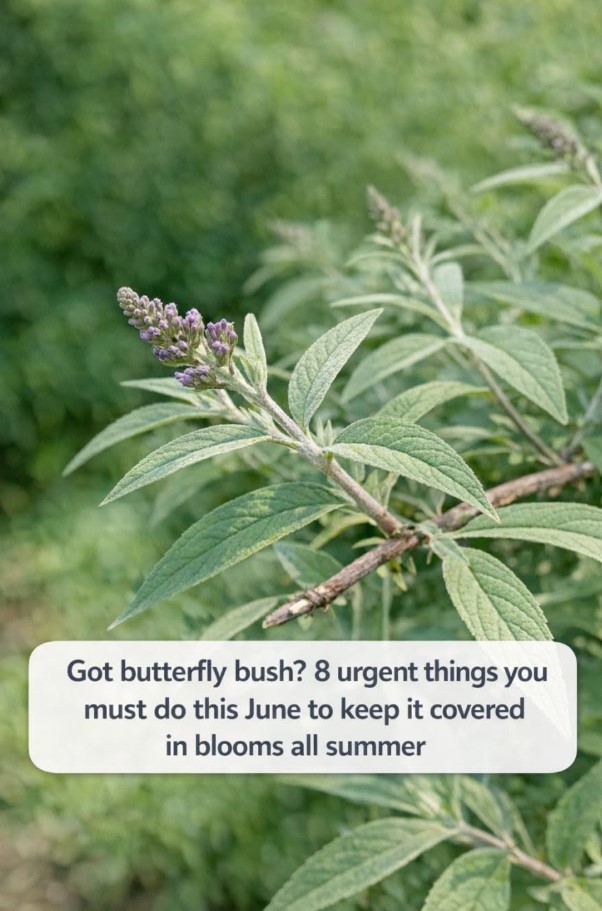
Butterfly bush (Buddleia) is one of the most loved flowering shrubs in home gardens thanks to its long, cone-shaped flower clusters and its ability to attract butterflies, bees, and other pollinators. When it’s healthy and well cared for, it can produce an impressive display of blooms that lasts all summer long.
However, many gardeners notice that their butterfly bush produces fewer flowers, grows unevenly, or becomes woody and unattractive over time. The truth is that timing is everything. June is a crucial month because the plant enters its active growth and blooming phase, and the care it receives now will determine how strong and colorful it will be for the rest of the season.
In this article, we will go through 8 urgent and essential tasks you must do in June to keep your butterfly bush thriving, blooming continuously, and looking its best all summer.
1. Give It Full Sun for Maximum Blooms
Butterfly bush thrives in bright sunlight.
Ideal conditions:
- At least 6–8 hours of direct sun daily
- Open, unshaded areas
- Warm, well-lit garden spots
Without enough sunlight, flowering will be weak and sparse.
2. Water Deeply but Not Too Often
Proper watering helps establish strong roots.
Best practices:
- Water deeply once or twice a week
- Allow soil to dry slightly between waterings
- Avoid constant soggy soil
Overwatering can reduce blooming and lead to root problems.
3. Feed It for Strong Flower Production
June feeding is essential for continuous blooms.
Use:
- Balanced slow-release fertilizer
- Bloom-boosting fertilizer (higher phosphorus)
- Organic compost for soil health
Feed every 4–6 weeks during the growing season.
4. Deadhead Spent Flowers Regularly
Removing old blooms encourages new ones.
Benefits:
- Extends blooming period
- Improves plant appearance
- Redirects energy to fresh flowers
Simply trim faded flower spikes back to a leaf node.
5. Prune Lightly to Shape the Plant
Butterfly bush responds well to pruning.
What to do in June:
- Remove dead or weak branches
- Shape overgrown stems lightly
- Encourage branching for more blooms
Avoid heavy pruning during active flowering.
6. Watch for Common Pests
While generally hardy, butterfly bush can still attract pests.
Common issues include:
- Aphids
- Spider mites
- Caterpillars
Use natural insecticidal soap if needed and check leaves regularly.
7. Improve Soil Quality Around the Base
Healthy soil leads to better blooms.
Ideal soil conditions:
- Well-draining soil
- Moderately fertile ground
- Added compost for nutrients
Avoid heavy clay or compacted soil without amendment.
8. Mulch to Protect Roots and Retain Moisture
Mulching helps stabilize growing conditions.
Benefits include:
- Keeps soil moist longer
- Reduces weed competition
- Protects roots from heat stress
- Improves soil structure over time
Use bark, wood chips, or organic mulch around the base.
Common Mistakes to Avoid
Many gardeners unintentionally reduce blooming by:
- Planting in partial shade
- Overwatering the plant
- Skipping deadheading
- Using too much nitrogen fertilizer
- Ignoring pruning needs
Avoiding these mistakes will dramatically improve flower production.
Conclusion :
Butterfly bush is a beautiful, fast-growing shrub that can transform any garden into a vibrant, pollinator-friendly space filled with color and life. However, achieving continuous, abundant blooms requires proper care at the right time—especially in June when the plant is actively growing and preparing for peak flowering.
By following these 8 urgent care steps, you can dramatically improve the health, shape, and blooming performance of your butterfly bush. Simple actions like proper watering, regular deadheading, feeding, and ensuring full sunlight can make a significant difference in how the plant performs throughout the summer.
With consistent attention, your butterfly bush will not only attract butterflies and bees but also become one of the most eye-catching features in your garden, producing lush blooms all season long.