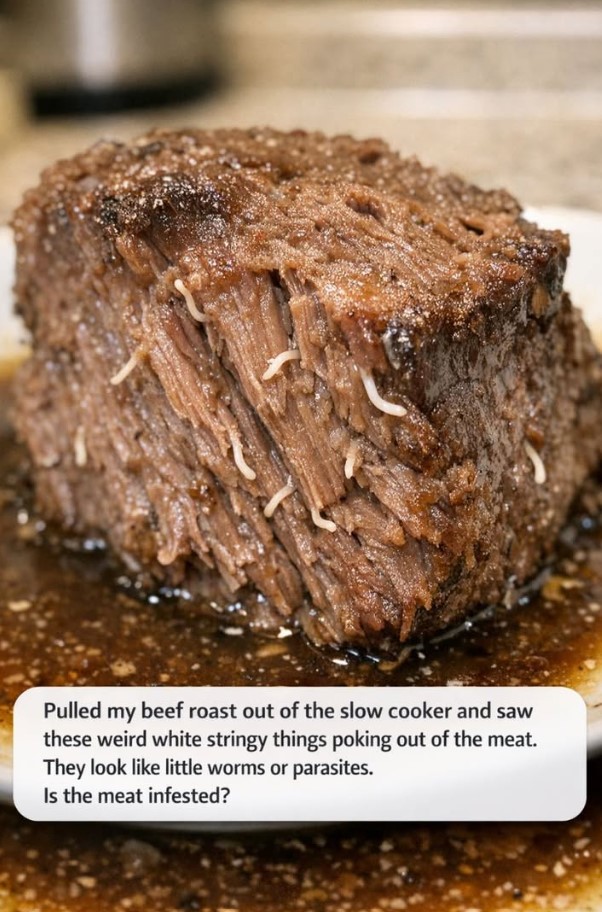
Cooking a beef roast in a slow cooker is one of the easiest ways to prepare a tender, flavorful meal. After hours of slow cooking, the meat usually becomes soft, juicy, and easy to shred. However, sometimes home cooks notice something unusual when they open the lid—thin white stringy fibers sticking out of the meat that can look alarming at first glance.
It’s not uncommon for people to panic and wonder if the meat is unsafe or even “infested.” But in most cases, what you’re seeing is a completely normal part of how beef changes during the cooking process.
In this article, we will explain what those white stringy fibers actually are, why they appear in slow-cooked meat, and how to tell the difference between normal connective tissue and something that could indicate a problem.
What Are the White Stringy Things in Beef?
The most likely explanation is simple: connective tissue and muscle fibers breaking down during cooking.
Beef contains natural components such as:
- Collagen
- Elastin
- Muscle fibers
When meat is cooked slowly over several hours, these components begin to break down and separate.
What you may see as “stringy white pieces” are usually:
- Collagen fibers turning soft
- Tendons or connective tissue loosening
- Shredded muscle strands
Far from being harmful, this is actually a sign that the meat is cooking properly.
Why It Happens More in Slow Cookers
Slow cookers are designed to cook food at low temperatures for long periods.
This cooking method:
- Breaks down tough connective tissue
- Converts collagen into gelatin
- Makes meat tender and easy to shred
Because the process is gradual, fibers don’t instantly disappear—they separate visibly instead.
Are These Worms or Parasites?
No—this is one of the most common misconceptions.
Those white stringy structures are not parasites.
Parasites in properly handled and cooked beef are extremely rare in commercially sold meat due to strict food safety regulations.
What people usually see instead is:
- Normal muscle tissue separation
- Fat and collagen strands
- Shredded connective fibers
So while the appearance may look unusual, it is completely normal.
How to Tell If Beef Is Safe to Eat
Here are signs that your slow-cooked beef is perfectly safe:
1. Smell
- Should smell like cooked beef
- No sour or rotten odor
2. Texture
- Tender and easy to shred
- Not slimy or sticky
3. Color
- Brown, gray-brown, or slightly caramelized
- No green or unusual discoloration
If all these are normal, the meat is safe.
What Causes Confusion for Home Cooks
Many people mistake normal cooking changes for something dangerous because:
- Raw meat looks very different from cooked meat
- Slow cooking exaggerates texture changes
- Online misinformation spreads quickly
- Lack of familiarity with connective tissue breakdown
Understanding basic meat structure helps avoid unnecessary concern.
How Slow Cooking Actually Improves Meat Quality
The same “stringy” process is actually what makes slow-cooked beef delicious.
During cooking:
- Tough fibers soften
- Collagen turns into rich gelatin
- Meat becomes juicy and tender
- Flavors deepen and blend
This is why slow cooker recipes are so popular for roasts, stews, and pulled beef.
Tips for Better Slow-Cooked Beef
To get the best results:
1. Choose the Right Cut
Best options include:
- Chuck roast
- Brisket
- Shoulder cuts
These contain more collagen, which breaks down beautifully.
2. Cook Low and Slow
- 6–10 hours on low heat is ideal
- Avoid rushing the process
3. Don’t Overfill the Slow Cooker
Proper heat circulation is important for even cooking.
4. Add Enough Liquid
Broth, sauce, or juices help break down connective tissue properly.
When You Should Be Concerned
Although rare, you should avoid eating meat if:
- It smells bad or rotten
- It has a slimy texture
- It is undercooked or still raw in the center
- It has been stored improperly before cooking
Otherwise, white stringy fibers alone are not a warning sign.
Conclusion :
Seeing white stringy fibers in a slow-cooked beef roast can be surprising, especially if you are not expecting it. However, this is simply a natural part of how meat behaves during long, slow cooking. What you are seeing is connective tissue breaking down—not parasites or anything harmful.
In fact, these changes are exactly what create tender, flavorful, fall-apart beef. The slow cooking process transforms tough muscle fibers into soft, juicy strands that are perfect for shredding and serving.
Understanding this process helps remove fear and builds confidence in the kitchen. Instead of worrying when you see these textures, you can recognize them as a sign that your meal is cooking exactly as it should.
So the next time you open your slow cooker and see those white strands, you can relax knowing your beef is not only safe—but on its way to becoming a delicious, perfectly tender dish.