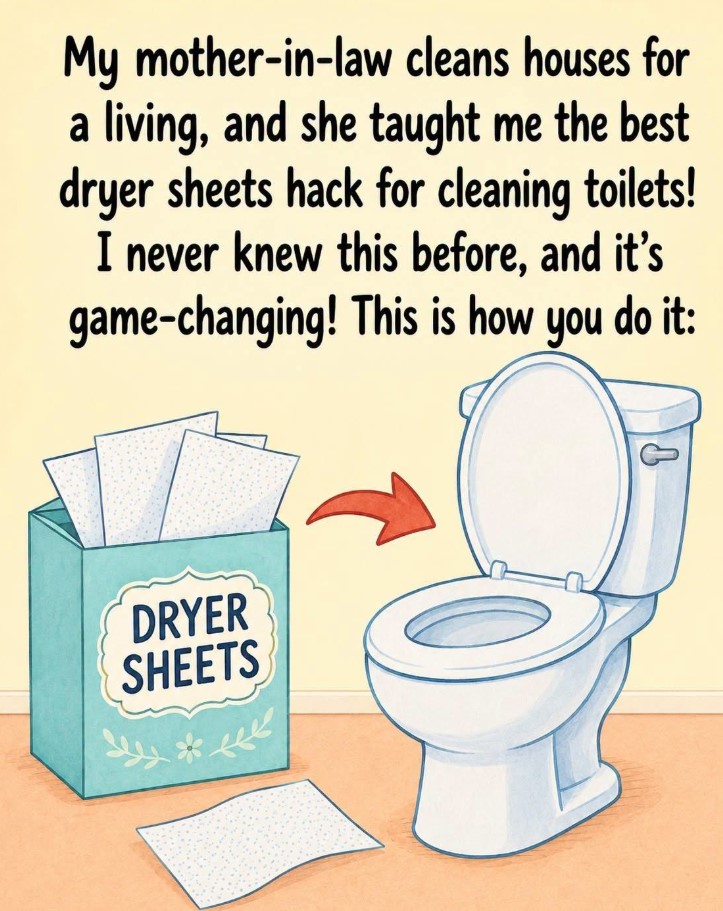
Household cleaning hacks are everywhere, but only a few become popular because they combine convenience, affordability, and surprisingly effective results. One trick that has gained attention in recent years involves using an ordinary dryer sheet to tackle stubborn toilet stains and mineral buildup. At first glance, it may sound unusual, yet many homeowners and cleaning enthusiasts swear by this simple method for removing rings, scuff marks, and hard water deposits with minimal effort.
The idea is straightforward: instead of reaching for a heavy-duty scrub brush or harsh chemicals, a used or fresh dryer sheet is used to gently scrub away grime from the toilet bowl or even marks on the outside of the toilet. While this hack isn’t a replacement for regular disinfecting, it can be a handy addition to your cleaning routine when dealing with light stains and mineral residue.
Before trying any household cleaning shortcut, it’s important to understand why it works, when it’s appropriate to use, and what precautions you should take. Let’s take a closer look at this surprisingly popular cleaning trick and discover whether it deserves a place in your regular bathroom cleaning routine.
Why Dryer Sheets Work
Dryer sheets are designed to soften fabrics and reduce static electricity during the drying cycle. To accomplish this, they contain softening agents and lubricating compounds that remain on the sheet even after it’s been used.
These ingredients can also help loosen certain types of residue from smooth surfaces, making it easier to wipe away:
- Hard water stains
- Soap scum
- Light mineral deposits
- Dust and dirt
- Scuff marks
Additionally, the slightly textured surface of the sheet provides gentle abrasion without being overly harsh on porcelain.
Can Dryer Sheets Really Clean a Toilet?
The answer is yes—but with some limitations.
A dryer sheet can be effective for removing:
- Toilet bowl rings caused by hard water
- Mineral buildup
- Surface grime
- Marks around the toilet base
- Dust on the tank and lid
However, it should not replace proper toilet cleaners or disinfectants when sanitation is the primary goal.
Cleaning and disinfecting are two different tasks:
- Cleaning removes dirt and visible residue.
- Disinfecting kills bacteria, viruses, and other germs.
For a hygienic bathroom, both steps are important.
How to Use the Dryer Sheet Hack
Trying this method is simple and requires very little preparation.
What You’ll Need
- One used or fresh dryer sheet
- Rubber cleaning gloves
- Toilet brush
- Toilet cleaner or disinfectant (optional but recommended)
- Trash can
Step 1: Flush the Toilet
Begin by flushing the toilet to wet the bowl and remove loose debris.
Step 2: Put on Gloves
Always wear cleaning gloves to protect your hands.
Step 3: Scrub with the Dryer Sheet
Use the dryer sheet to gently rub areas with:
- Water rings
- Mineral deposits
- Light stains
- Scuff marks
Apply gentle pressure while working in small circular motions.
You’ll often notice residue lifting surprisingly quickly.
Step 4: Dispose of the Sheet Properly
Once finished, throw the dryer sheet into the trash.
Never flush dryer sheets down the toilet, as they are not designed to break down in plumbing systems and may contribute to clogs.
Step 5: Finish with a Disinfectant
For complete bathroom hygiene, apply your usual toilet cleaner or disinfectant and follow the product directions.
This ensures harmful germs are properly eliminated.
Why Used Dryer Sheets Often Work Better
Interestingly, many people prefer used dryer sheets.
After a drying cycle, the sheet becomes softer and slightly less saturated with fabric softener, making it easier to scrub delicate surfaces without leaving as much residue behind.
Using a sheet that has already served its original purpose also gives it a second life before disposal.
Other Places Dryer Sheets Can Help Clean
Beyond the toilet, dryer sheets may be useful for removing light dust and residue from several household surfaces.
Many people use them on:
- Baseboards
- Window blinds
- Ceiling fan blades
- Chrome fixtures
- Glass shower doors
- Bathroom faucets
- Cabinet tops
- Trash cans
Their anti-static properties may also help reduce future dust buildup on certain surfaces.
Always test a small, hidden area first to ensure compatibility with the material.
What This Hack Won’t Do
Despite its popularity, dryer sheets are not miracle cleaners.
They are not suitable for:
- Removing heavy limescale
- Eliminating severe rust stains
- Replacing disinfectants
- Cleaning heavily soiled toilets
- Clearing clogged drains
For tougher cleaning jobs, specialized cleaning products are usually more effective.
Alternative Natural Toilet Cleaning Methods
If you prefer to avoid dryer sheets, several household products can also help clean toilet bowls.
Baking Soda
Sprinkle baking soda into the bowl and scrub gently to help remove light stains and odors.
White Vinegar
Vinegar can help dissolve some mineral deposits when allowed to sit before scrubbing.
Baking Soda and Vinegar Together
The fizzing reaction may help loosen residue, although the cleaning power mainly comes from the mechanical scrubbing rather than the bubbles themselves.
Pumice Stone
Special pumice stones designed for toilets can remove stubborn hard water rings from porcelain when used carefully.
Always follow product instructions to avoid scratching surfaces.
Tips for Keeping Your Toilet Cleaner Longer
Regular maintenance reduces the need for heavy scrubbing.
Simple habits include:
- Cleaning the toilet weekly.
- Flushing regularly.
- Addressing hard water stains early.
- Wiping exterior surfaces often.
- Keeping the bathroom well ventilated.
- Repairing leaks that leave standing water.
Consistent cleaning prevents stains from becoming much harder to remove later.
Common Mistakes to Avoid
To get the best results, avoid these common errors:
Don’t Flush Dryer Sheets
Even products labeled as biodegradable are generally not intended for toilet plumbing.
Always dispose of them in the trash.
Don’t Skip Disinfecting
Removing visible stains doesn’t necessarily eliminate germs.
Finish with an approved disinfectant when sanitation is important.
Don’t Use Excessive Force
Gentle scrubbing is usually sufficient.
Aggressive scrubbing may unnecessarily wear cleaning gloves or delicate finishes around the toilet.
Don’t Mix Cleaning Chemicals
Never combine bleach with vinegar, ammonia, or other household cleaners.
Dangerous fumes can result.
Always use products according to their labels.
Is This Hack Safe for Septic Systems?
Because the dryer sheet should never be flushed, using it only as a cleaning cloth generally poses no direct risk to septic systems.
The important rule remains the same:
Use the sheet for scrubbing, then throw it away.
Why Household Hacks Become So Popular
Simple cleaning tricks spread quickly because they often:
- Save money.
- Use common household items.
- Reduce cleaning time.
- Offer creative solutions.
- Make chores feel less intimidating.
While not every internet cleaning hack lives up to the hype, some provide genuinely useful shortcuts when used appropriately.
The dryer sheet method falls into this category for many homeowners, especially when dealing with light stains and everyday maintenance.
When Traditional Cleaners Are Still the Best Choice
There are times when dedicated cleaning products remain the better option.
Use standard toilet cleaners if you’re dealing with:
- Heavy mineral buildup
- Rust stains
- Mold
- Deep discoloration
- Strong odors
- Thorough disinfection after illness
These products are specifically formulated for challenging bathroom cleaning tasks and often produce faster, more reliable results.
Conclusion :
The dryer sheet toilet-cleaning hack may seem unusual, but it demonstrates how everyday household items can sometimes serve more than one purpose. Thanks to their soft texture and conditioning agents, dryer sheets can help loosen light mineral deposits, hard water rings, and surface grime, making routine toilet maintenance a little easier. For many people, it’s a convenient way to freshen up the bathroom between deeper cleanings while giving a used dryer sheet one last practical use before disposal.
That said, it’s important to keep realistic expectations. While dryer sheets can assist with cleaning visible residue, they are not a substitute for proper disinfectants or cleaners designed to kill bacteria and viruses. For a truly clean and hygienic bathroom, use this hack as a helpful first step, then follow up with a quality toilet cleaner or disinfectant according to the manufacturer’s instructions. Also remember to dispose of the dryer sheet in the trash rather than flushing it, as flushing it can lead to plumbing or septic issues.
In the end, the best cleaning routine is one that combines smart shortcuts with proven cleaning practices. Whether you choose to try the dryer sheet trick or stick with traditional methods, regular maintenance, prompt stain removal, and proper disinfection will help keep your toilet looking fresh, smelling clean, and functioning properly for years to come. Sometimes, the simplest household tips really can make everyday chores a little easier.