Sorting through a loved one’s belongings after they pass away often leads to unexpected discoveries. Hidden away in old drawers, toolboxes, sewing kits, or display cabinets are objects that once had an important purpose but now seem completely mysterious. As older generations pass on, many everyday household tools from decades ago become forgotten, leaving younger family members wondering what they were used for.
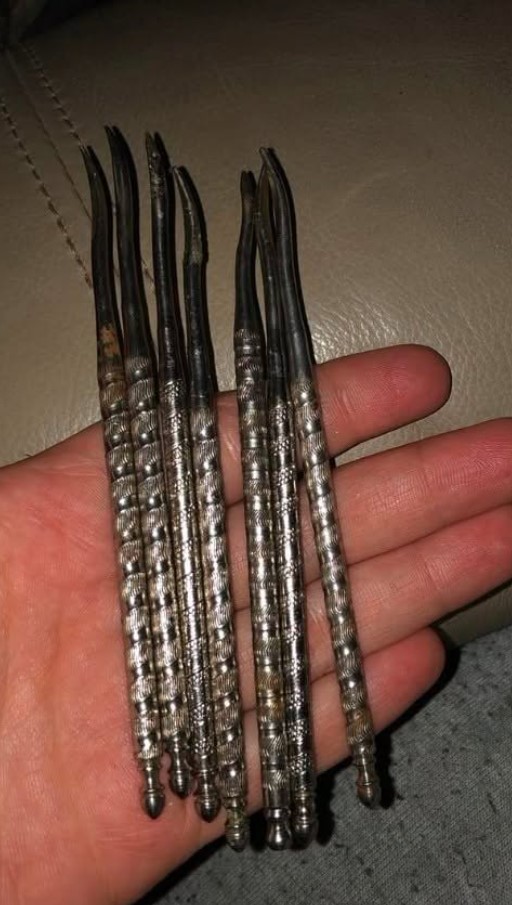
The collection of unusual metal objects shown in the image is a perfect example. Their curved ends, textured handles, and worn appearance make them look like specialized instruments, antique dental tools, or even something from a bygone medical kit. It’s no surprise that anyone finding them would be curious about their purpose.
Although they may seem unusual today, these tools are most likely vintage button hooks—once an essential accessory for dressing before the invention of modern zippers, elastic fabrics, and easy-to-fasten clothing. Their story offers a fascinating glimpse into everyday life during the late 19th and early 20th centuries.
A Time Before Zippers
Today, getting dressed usually takes only a few minutes. Shirts have buttons that are easy to fasten, shoes often use Velcro or slip-on designs, and many garments include stretchy materials that simplify dressing.
Things were very different a century ago.
Many articles of clothing featured:
- Tiny, tightly sewn buttons.
- High leather boots.
- Gloves with numerous small fasteners.
- Corsets.
- Children’s formal clothing.
- Elaborate dresses.
Fastening dozens of tiny buttons by hand could be difficult and time-consuming.
This created the need for a simple but effective tool.
What Is a Button Hook?
A button hook is a small handheld tool designed to pull tiny buttons through tightly fitting buttonholes.
The narrow curved hook slides through the buttonhole, catches the button from behind, and gently pulls it through.
This simple action saves both time and effort while reducing strain on the fingers.
Although almost forgotten today, button hooks were once found in nearly every household.
Why Were They So Popular?
During the Victorian and Edwardian eras, fashion emphasized elegance and detailed tailoring.
Clothing often included rows of decorative buttons that also served practical purposes.
Examples included:
- Women’s boots.
- Men’s dress boots.
- Children’s shoes.
- Long gloves.
- Dresses.
- Jackets.
- Corsets.
Many of these buttons were extremely small and fit tightly into reinforced buttonholes.
Without a button hook, fastening them could become frustrating.
Looking More Closely at the Design
The objects in the photograph share several characteristics commonly found in antique button hooks.
These include:
- Long metal shafts.
- Curved hooked tips.
- Decorative textured handles.
- Rounded ends for comfortable grip.
- Durable steel construction.
Some examples even featured ornate silver handles, carved wood grips, ivory, bone, or engraved decorative patterns.
The textured handles improved grip while using the tool.
Why Are There Several Different Sizes?
Many antique families owned multiple button hooks.
Different sizes served different purposes.
For example:
Small Hooks
Perfect for gloves with tiny buttons.
Medium Hooks
Ideal for shirts, jackets, and children’s clothing.
Large Hooks
Designed for sturdy leather boots with larger buttons.
Having several sizes made dressing much easier depending on the garment.
A Common Item in Every Home
Before zippers became common in the early 20th century, button hooks were everyday necessities.
People often kept them:
- On dressing tables.
- Inside sewing baskets.
- In bedroom drawers.
- Alongside shoe-care supplies.
- In travel cases.
Some families even carried small folding versions while traveling.
The Arrival of the Zipper
Everything changed as clothing design evolved.
The widespread adoption of zippers during the 1920s and 1930s dramatically reduced the need for button hooks.
Over time:
- Boots changed style.
- Buttons became larger.
- Elastic materials became popular.
- Slip-on shoes increased in popularity.
As a result, button hooks gradually disappeared from everyday life.
Many ended up tucked away in drawers where they remained forgotten for decades.
Why People Often Misidentify Them
Today, vintage button hooks frequently puzzle people because their design resembles several other antique tools.
They’re sometimes mistaken for:
- Dental instruments.
- Surgical tools.
- Fireplace tools.
- Leatherworking tools.
- Antique crochet hooks.
- Shoe repair tools.
- Engraving instruments.
Without historical context, it’s easy to understand why these objects appear mysterious.
Could They Be Valuable?
Many antique button hooks have become collectible.
Their value depends on several factors, including:
- Age.
- Manufacturer.
- Materials.
- Decorative craftsmanship.
- Overall condition.
- Historical significance.
Rare examples featuring sterling silver, carved ivory (where legally collectible), or famous manufacturers may attract collectors of antique clothing accessories.
Ordinary steel examples generally have modest value but remain interesting historical artifacts.
How to Identify Antique Button Hooks
If you discover similar tools, look for clues such as:
- Manufacturer’s marks.
- Patent numbers.
- Decorative engravings.
- Silver hallmarks.
- Unique handle materials.
Researching these markings may help determine when and where they were produced.
Caring for Vintage Metal Tools
If these items have sentimental or collectible value, proper care is important.
Consider these tips:
- Store them in a dry environment.
- Remove loose dust with a soft cloth.
- Avoid harsh chemical cleaners.
- Prevent prolonged exposure to moisture.
- Preserve original finishes whenever possible.
For highly valuable antiques, professional conservation may be preferable to aggressive polishing.
The Fascinating History Behind Everyday Objects
One of the most rewarding aspects of family heirlooms is discovering the stories behind them.
Ordinary household items often reveal how previous generations lived.
They remind us that everyday tasks once required tools we rarely think about today.
Simple inventions like the button hook made daily routines more convenient long before modern clothing technology transformed fashion.
Preserving Family History
When grandparents or other relatives pass away, it’s tempting to discard unfamiliar objects during the process of cleaning out a home.
However, taking time to identify unusual items can preserve important pieces of family history.
You may discover objects connected to:
- Occupations.
- Hobbies.
- Military service.
- Travel.
- Personal collections.
- Everyday household life.
Even inexpensive tools can carry tremendous sentimental value because of the stories they represent.
Could These Have Been Used for Something Else?
While the objects in the image strongly resemble vintage button hooks, it’s worth remembering that many antique tools share similar shapes.
Without additional markings, packaging, or family history, it’s impossible to identify them with complete certainty from a single photograph alone. They could potentially belong to another specialized tool category.
If you’re curious, checking for engraved names or patent numbers—or showing them to an antiques dealer or local museum—may help confirm exactly what they are.
Conclusion :
Finding mysterious objects among a loved one’s belongings can turn an ordinary day of sorting through keepsakes into an unexpected journey through history. The unusual metal tools shown in the image most closely resemble vintage button hooks, practical accessories that once made fastening the tiny buttons on boots, gloves, dresses, and jackets much easier. Though they have largely disappeared from modern life, they were once indispensable items found in homes around the world.
Whether these particular tools are indeed button hooks or another type of antique implement, they serve as a reminder that everyday life has changed dramatically over the past century. Countless objects that were once essential have become unfamiliar as technology, fashion, and lifestyles evolved. Taking the time to learn about these forgotten items not only satisfies curiosity but also helps preserve the memories and traditions of earlier generations.
Before deciding to discard unusual heirlooms, consider researching their history or consulting an antiques expert. What first appears to be a mysterious collection of old metal tools may turn out to be a fascinating piece of family history—one that connects the past with the present and keeps the stories of those who owned them alive for future generations.