Halloween is known for colorful costumes, carved pumpkins, spooky decorations, and children walking from door to door collecting candy. But in recent years, some families have introduced different colors into the tradition, and these colors can carry an important message.
If you notice a child carrying a blue Halloween bucket or see a teal pumpkin displayed on someone’s porch, you might wonder what it means. Although the two colors look similar, they are associated with different efforts to make Halloween more welcoming for children with different needs.
A teal pumpkin generally signals that a household has non-food treats available for children who cannot safely eat certain candies. A blue bucket, meanwhile, is an informal symbol some families use to indicate that a child may be autistic or have communication differences.
Understanding these symbols can help neighbors create a more inclusive Halloween experience. It also reminds us that not every child celebrates the holiday in exactly the same way, and every child deserves the opportunity to participate.
What Does a Teal Pumpkin Mean on Halloween?
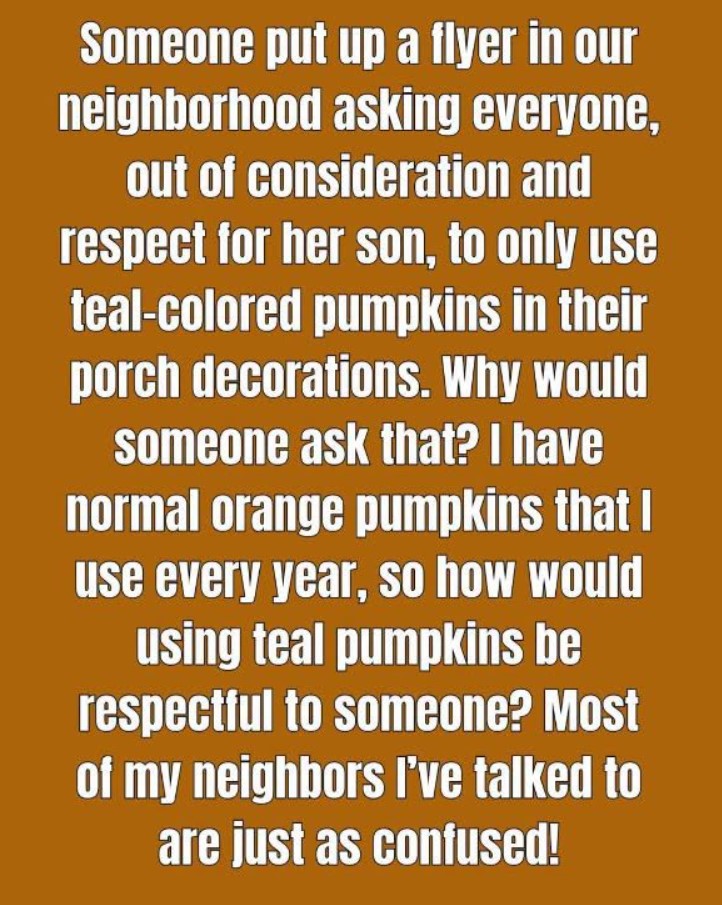
A teal pumpkin displayed outside a home usually means that the household offers non-food treats for trick-or-treaters.
This tradition is part of the Teal Pumpkin Project, an initiative promoted by Food Allergy Research & Education (FARE). The project encourages families to provide alternatives to traditional Halloween candy so children with food allergies and other dietary restrictions can enjoy the holiday more safely.
For many children, collecting chocolate, gummies, and other sweets is one of the most exciting parts of Halloween. However, some candies contain ingredients that can trigger serious allergic reactions. Others may not be suitable for children with certain medical conditions or dietary needs.
A teal pumpkin lets families know that there may be another option available.
Instead of offering only candy, participating households might provide stickers, glow sticks, small toys, pencils, bubbles, or other inexpensive items.
The idea is simple: children should not have to miss out on Halloween fun because they cannot eat the treats traditionally handed out at the door.
Why Was the Teal Pumpkin Project Created?
The Teal Pumpkin Project grew from a family’s effort to make Halloween more accessible to children living with food allergies.
In 2012, Becky Basalone, a mother in Tennessee whose son had a severe food allergy, began promoting the idea of offering non-food treats and using a teal pumpkin to identify participating homes. The concept gained attention and eventually spread beyond the local community.
Food Allergy Research & Education later helped expand the initiative nationally in 2014, turning it into a broader awareness campaign.
The project addresses a problem that can be easy to overlook. Halloween candy often contains common allergens, including peanuts, tree nuts, milk, eggs, soy, and wheat. Even when a household wants to be helpful, it may not know which ingredients are safe for a particular child.
Offering a separate selection of non-food items provides an alternative without requiring families to explain their circumstances at every doorstep.
The teal pumpkin has therefore become a recognizable symbol of consideration, inclusion, and awareness.
It does not mean that a house cannot offer candy. Instead, it indicates that non-food treats are available as another choice.
What Should You Give Children When You Display a Teal Pumpkin?
Participating in the Teal Pumpkin Project does not need to be expensive or complicated.
A small container of inexpensive items can make a difference. You might offer:
- Stickers featuring Halloween characters
- Glow sticks or light-up rings
- Bubbles
- Small coloring books and crayons
- Pencils and erasers
- Miniature toys or figurines
- Spider rings or other simple Halloween novelties
- Small notebooks or bookmarks
Choose items appropriate for the ages of the children who may visit your home. Avoid small objects that could pose a choking hazard for very young children, and check product safety information when necessary.
If you also provide candy, keep the non-food items in a separate bowl or container so families can easily identify the alternatives.
Remember that a teal pumpkin is a signal that non-food treats are available, not a guarantee that every candy offered at that home is safe for every allergy.
Parents and caregivers should continue checking food labels and following their usual allergy precautions.
What Does a Blue Halloween Bucket Mean?
A blue Halloween bucket is an informal symbol some families use to indicate that a trick-or-treater may be autistic or have communication differences.
Some children on the autism spectrum may communicate without speaking, find unfamiliar social interactions difficult, or prefer not to say the traditional phrase “trick or treat.” Others may speak comfortably but experience sensory sensitivities, anxiety, or other challenges during busy Halloween celebrations.
A blue bucket can serve as a gentle hint to neighbors that a child might participate in Halloween a little differently.
For example, a child may approach a front door, hold out a bucket, and wait quietly instead of speaking. They may not make eye contact, respond to questions, or say thank you in the way an adult expects.
The kindest response is usually simple: smile, offer a treat, and allow the child to continue at their own pace.
However, it is important to understand that blue buckets are not an official or universal autism identification system. The practice developed informally through parents sharing their experiences online, and families differ in whether they find the symbol helpful.
A blue bucket does not prove that a child is autistic, and not every autistic child carries one.
The most important message is to treat every trick-or-treater with patience and respect, regardless of the color of their bucket.
How Can You Respond If a Child Does Not Say “Trick or Treat”?
For many people, saying “trick or treat” is a familiar part of Halloween. Adults often expect children to greet them, ask for candy, and say thank you before leaving.
But communication does not look the same for everyone.
A child might be non-speaking, feel overwhelmed by the noise and excitement, or simply communicate through gestures rather than words. Another child may speak at home but find it difficult to talk to unfamiliar people.
If a child approaches your door and holds out a bucket without speaking, you do not need to make the situation complicated.
Offer the treat with a friendly smile.
You can say, “Happy Halloween!” without requiring a verbal response. If the child communicates through a gesture, nod, or smile, accept that as part of the interaction.
Avoid insisting that the child repeat a phrase before receiving a treat. Pressuring someone to speak can turn a fun activity into a stressful experience.
It is also best not to assume that a child is being rude simply because they do not respond in the expected way.
A little patience can make the experience more comfortable for both the child and their caregiver.
Blue Buckets and Teal Pumpkins: What Is the Difference?
Because blue and teal are similar shades, the two symbols can easily be confused. However, they generally communicate different messages.
A teal pumpkin is about the treats offered by a household. It indicates that non-food alternatives are available, particularly for children who cannot safely eat certain candies.
A blue bucket is about the trick-or-treater carrying it. Some families use it to suggest that a child may be autistic or have communication differences and may appreciate a more understanding interaction.
The teal pumpkin tradition is associated with an established initiative led by Food Allergy Research & Education. The blue bucket practice, by contrast, is informal and is not a universal symbol recognized by all autism organizations or families.
Neither symbol is required for a child to participate in Halloween.
A child with food allergies may carry a traditional orange bucket. An autistic child may carry a blue bucket, a teal bucket, or no special bucket at all.
The colors can offer useful information, but they should never determine whether a child is welcomed.
Why Some Families Appreciate Blue Buckets
For families who choose to use them, blue buckets can make Halloween interactions easier.
Parents may worry that neighbors will misunderstand their child’s communication style or interpret a lack of speech as bad manners. A recognizable signal can sometimes encourage adults to respond with greater patience.
The bucket may also help a child participate more independently. Rather than explaining their circumstances at every house, a family can use a simple visual cue to invite understanding.
For children who enjoy trick-or-treating but experience social communication challenges, this small adjustment may make the evening feel more comfortable.
However, families have different preferences. Some appreciate the extra awareness, while others worry that a colored bucket may draw unwanted attention to a child’s disability or lead strangers to make assumptions.
There is no single approach that works for every family.
The best response is to respect individual choices and remember that a child should not need to disclose a diagnosis to be treated kindly.
How to Make Halloween More Inclusive for Every Child
You do not need a special pumpkin or bucket to make your home welcoming. A few thoughtful adjustments can help children with different needs enjoy the celebration.
Offer choices. If possible, keep a selection of non-food treats alongside candy. This allows families to choose an option that suits their needs.
Be patient with communication. Not every child will speak, make eye contact, or respond to questions. A smile and a friendly greeting are often enough.
Avoid unnecessary pressure. Let children receive their treats without demanding a particular phrase, gesture, or performance.
Keep your approach calm. Some children find loud sounds, sudden movements, flashing lights, or frightening decorations overwhelming. A gentle greeting can make your doorstep less intimidating.
Respect personal space. Allow children to approach and leave comfortably. Do not touch a child, their belongings, or their bucket without permission.
Do not make assumptions. A colored bucket can provide a clue about a family’s preferences, but it cannot tell you everything about a child. Offer kindness without asking intrusive questions.
Make alternatives visible. If you participate in the Teal Pumpkin Project, display your teal pumpkin or a clear sign where families can easily see it.
These small actions can help create a Halloween atmosphere in which more children feel welcome.
Do Children Have to Carry Special Buckets to Receive Understanding?
Absolutely not.
Blue buckets and teal pumpkins can be helpful, but they are not requirements for participating in Halloween.
Some children have food allergies but prefer to use an ordinary candy bucket. Some autistic children enjoy wearing costumes, talking with neighbors, and collecting sweets without needing any additional accommodation. Others may prefer a quieter celebration or need support that a colored bucket cannot communicate.
Children also change from year to year. A child who finds Halloween overwhelming one season may feel more comfortable the next. Another child might enjoy the holiday but need a shorter route, fewer stops, or a calmer environment.
The most inclusive approach is to welcome children without expecting them to explain themselves.
If a family shares a particular need, listen and respect their preferences. If they do not, there is no need to ask personal questions simply because a child behaves differently from what you expected.
Halloween should be about enjoyment, imagination, and community—not about making every child follow the same social rules.
Conclusion: A Small Color Can Send a Meaningful Message
A blue Halloween bucket and a teal pumpkin may look like simple seasonal decorations, but they can communicate important messages about inclusion.
A teal pumpkin generally indicates that a household has non-food treats available for children with food allergies and other dietary needs. The symbol is part of the Teal Pumpkin Project, which encourages families to make Halloween more accessible to everyone.
A blue bucket is an informal signal some families use to indicate that a child may be autistic or communicate differently. It can encourage neighbors to be patient if a child does not speak, make eye contact, or follow the usual trick-or-treating routine. However, the symbol is not universal, and it should never be treated as proof of a diagnosis.
Both practices point toward the same larger idea: children deserve to enjoy Halloween without being excluded because of their individual needs.
You do not need to understand every condition or recognize every symbol to make a difference. Sometimes, the most helpful response is simply to smile, offer a treat, and allow each child to enjoy the evening in their own way.
This Halloween, consider adding a few non-food treats to your bowl, displaying a teal pumpkin if you participate in the project, or making your doorstep a little calmer and more welcoming.
A small act of understanding can turn an ordinary stop on a trick-or-treating route into a happy memory for a child and their family.