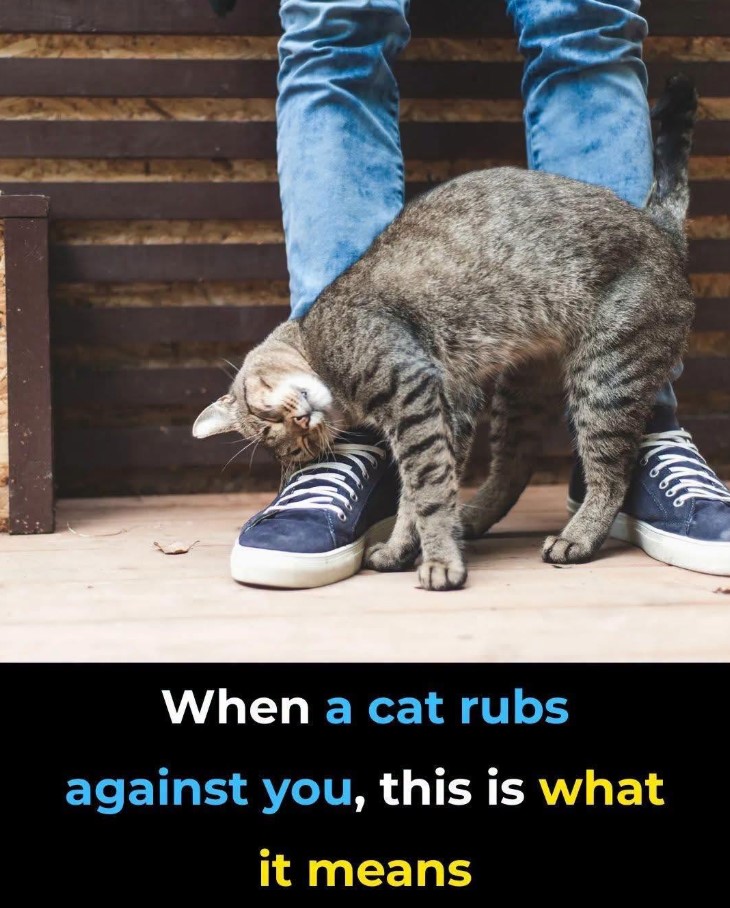
If you’ve ever had a cat weave between your legs, rub its face against your hand, or gently brush its body along your ankles, you’ve probably wondered what that behavior really means. Is your cat asking for food? Looking for attention? Or is there a deeper message hidden behind this affectionate gesture?
Cats communicate in many subtle ways. Unlike dogs, which often rely on obvious body language and vocalizations, felines express themselves through scent, posture, slow blinks, tail movements, and physical contact. One of the most common—and most misunderstood—behaviors is rubbing against people, furniture, and other animals.
While it may seem like a simple greeting, a cat rubbing against you is actually a complex form of communication that combines affection, trust, territory marking, and social bonding. Understanding why your cat does this can help strengthen your relationship and give you greater insight into your feline companion’s emotions.
Here’s what your cat is really trying to tell you when it rubs against you.
Cats Communicate Through Scent
One of the most important things to know about cats is that scent plays a huge role in their world. While humans rely primarily on sight, cats gather an incredible amount of information through smell.
Cats have specialized scent glands located around:
- Their cheeks
- Chin
- Forehead
- Lips
- Base of the tail
- Paws
When your cat rubs these areas against you, it leaves behind invisible scent markers called pheromones. Humans can’t smell them, but other cats certainly can.
These pheromones communicate familiarity, comfort, and ownership rather than aggression.
Your Cat Is Saying, “You’re Part of My Family”
One of the sweetest reasons a cat rubs against you is because it considers you part of its trusted social group.
In colonies of friendly cats, members often rub their heads and bodies together. This behavior, known as bunting, helps create a shared group scent that identifies everyone as belonging together.
When your cat bunts against you, it may be treating you exactly as it would another beloved cat.
This behavior shows that your pet feels safe, comfortable, and emotionally connected to you.
It’s a Sign of Trust
Cats are naturally cautious animals. They don’t usually expose themselves physically to people they don’t trust.
When a cat presses against your legs, leans into your hand, or rubs its face across your fingers, it’s showing remarkable confidence.
Your cat is essentially saying:
- I feel safe around you.
- I don’t see you as a threat.
- I enjoy being close to you.
For many cats, this physical contact is one of the highest compliments they can give.
They’re Marking You as “Theirs”
Although it may sound possessive, scent marking is perfectly normal feline behavior.
By leaving pheromones on you, your cat is creating a familiar scent profile.
Instead of saying:
“This belongs to me.”
The message is closer to:
“This is someone I know and trust.”
These scent markers help reduce stress because familiar smells make cats feel secure in their environment.
That’s why many cats rub against:
- Their owners
- Furniture
- Doorways
- Favorite blankets
- Toys
- Other pets
Everything carrying that familiar scent becomes part of their comfort zone.
It May Be Their Way of Greeting You
Have you noticed your cat immediately rubbing against your legs when you walk through the front door?
This is often a feline version of saying hello.
After you’ve been away, your scent has changed slightly from being outside. Your cat greets you by refreshing the shared family scent while also welcoming you home.
Many cats combine this greeting with:
- Purring
- Tail held high
- Soft meows
- Slow blinking
- Following you around the house
Together, these behaviors create a warm social interaction.
Your Cat Could Be Asking for Attention
Sometimes the message is much simpler.
Your cat may simply want:
- Petting
- Playtime
- Companionship
- Conversation
- Cuddles
Cats quickly learn that rubbing against their owners often results in positive attention.
If every rub earns gentle strokes or affectionate words, the behavior naturally becomes even more frequent.
Hunger Can Also Play a Role
If rubbing is accompanied by loud meowing, walking toward the food bowl, or repeatedly circling your legs near feeding time, your cat may simply be reminding you that dinner is overdue.
Cats are excellent at creating routines.
If you normally feed your pet at a certain hour, they often begin their “reminder campaign” several minutes beforehand.
The rubbing isn’t only affection—it can also be an effective request.
Stress Relief Through Familiar Contact
Physical contact helps many cats feel calmer.
When a cat rubs against someone they trust, the familiar scent exchange may help lower anxiety and increase feelings of security.
You might notice this behavior becoming more frequent after:
- Moving to a new home
- Visitors arriving
- Loud noises
- Fireworks
- Traveling
- Rearranging furniture
Seeking contact with trusted people helps many cats regain confidence.
Why Cats Rub Their Faces Specifically
When your cat pushes its forehead or cheeks into your hand, it’s often using the facial scent glands that produce comforting pheromones.
These pheromones are associated with:
- Relaxation
- Familiarity
- Safety
- Positive social bonding
This explains why face rubbing is usually a gentle, calm behavior rather than an energetic one.
Why They Rub Around Your Legs
Your legs are often the easiest part of your body for a cat to reach while standing.
As they weave between your ankles, they can leave scent along both sides of their body while maintaining close contact.
This behavior may also encourage you to stop walking and pay attention to them.
Many cats have mastered this technique remarkably well.
Body Language Matters
To understand what your cat is communicating, watch the entire body—not just the rubbing itself.
Signs of affection include:
- Tail held upright
- Relaxed ears
- Soft eyes
- Gentle purring
- Slow blinking
- Calm posture
Signs your cat may be overstimulated include:
- Tail twitching rapidly
- Flattened ears
- Dilated pupils
- Sudden biting
- Swatting
Reading these additional signals helps you respond appropriately.
Every Cat Has Its Own Personality
Not every affectionate cat rubs constantly.
Some cats prefer:
- Sitting nearby
- Sleeping next to you
- Gentle head bumps
- Quiet companionship
- Following you from room to room
Others become enthusiastic greeters, rubbing against everyone they know.
Breed, early socialization, age, and individual personality all influence how physically affectionate a cat becomes.
Should You Encourage the Behavior?
Generally, yes.
If your cat enjoys rubbing against you, it’s usually a healthy sign of trust and bonding.
You can respond by:
- Speaking softly
- Offering gentle petting if your cat enjoys it
- Letting them initiate contact
- Respecting their boundaries if they walk away
Avoid forcing interaction once the rubbing stops. Cats appreciate having control over when affection begins and ends.
When Rubbing Could Signal a Problem
Although rubbing is usually completely normal, sudden changes deserve attention.
Consider consulting a veterinarian if your cat:
- Rubs excessively while scratching constantly
- Develops bald patches
- Seems unusually restless
- Rubs its face due to discomfort
- Shows signs of skin irritation
- Stops interacting altogether after previously being affectionate
Medical issues such as allergies, ear infections, parasites, or skin conditions can sometimes change rubbing behavior.
Building an Even Stronger Bond
The more secure your cat feels, the more naturally affectionate it may become.
Simple ways to strengthen your relationship include:
- Maintaining a consistent daily routine.
- Providing interactive play sessions.
- Offering safe hiding places and climbing areas.
- Respecting your cat’s personal space.
- Rewarding calm interactions with praise or treats.
- Spending quiet time together without forcing attention.
Over time, your cat learns that you are a dependable source of safety and comfort, making affectionate behaviors like rubbing even more meaningful.
Conclusion :
When a cat rubs against you, it’s usually much more than a random habit. It’s a sophisticated form of communication that blends affection, trust, scent marking, and social bonding into one simple gesture. By sharing its scent with you, your cat is creating a sense of familiarity and including you in its trusted circle. Whether it’s greeting you after a long day, asking for attention, seeking comfort, or simply expressing love in its own unique way, this behavior is generally one of the clearest signs that your feline companion feels secure in your presence.
Understanding these subtle signals allows you to build an even stronger relationship with your cat. Rather than viewing the rubbing as merely cute or attention-seeking, you can recognize it as an expression of confidence and companionship. Every cat has its own personality, but when one chooses to rub against you, it’s often offering one of the greatest compliments a feline can give: the reassurance that you’ve earned its trust and become an important part of its world.