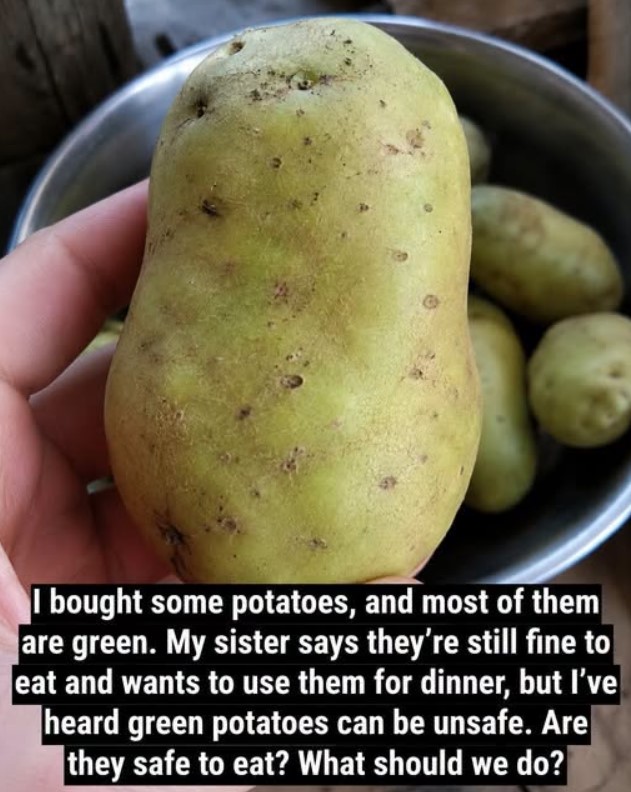
Potatoes are one of the most versatile and widely used vegetables in kitchens around the world. Whether mashed, baked, roasted, or fried, they are a staple ingredient in countless meals. However, it can be surprising—and even a little alarming—to discover that some potatoes have developed a green tint beneath their skin. Many people wonder if these potatoes are still safe to cook or if they should be thrown away immediately.
The good news is that green potatoes aren’t always dangerous, but they do deserve careful attention. The green color itself isn’t harmful, yet it often signals changes inside the potato that could make it unsafe if consumed in large amounts. Understanding why potatoes turn green, how to tell when they’re still usable, and the best ways to store them can help you reduce food waste while keeping your meals safe. Here’s everything you need to know before adding those green potatoes to tonight’s dinner.
Why Do Potatoes Turn Green?
The green color appears when potatoes are exposed to light for extended periods.
Like many plants, potatoes produce chlorophyll when exposed to sunlight or strong indoor lighting. Chlorophyll is the same natural pigment that makes leaves green, and it is completely harmless on its own.
However, light exposure often triggers another change inside the potato that deserves more attention.
The Connection Between Green Color and Solanine
When potatoes receive too much light or experience physical damage, they can begin producing solanine, a naturally occurring chemical that helps protect the plant from insects and disease.
Unlike chlorophyll, solanine can be harmful if consumed in large amounts.
Generally, the greener the potato becomes, the greater the chance that solanine levels have increased, although the amount cannot be determined simply by looking at the potato.
Is It Safe to Eat Green Potatoes?
The answer depends on how much of the potato has turned green.
If only a small portion of the surface is green:
- Peel the potato generously.
- Cut away all green areas.
- Remove any sprouts or eyes.
- Check that the flesh underneath looks normal.
If the potato is deeply green throughout, has multiple sprouts, or tastes bitter, it’s best to throw it away.
Signs a Potato Should Be Discarded
Besides greening, watch for these warning signs:
- A strong bitter taste.
- Large or numerous sprouts.
- Soft, wrinkled texture.
- Mold or unusual discoloration.
- A rotten or unpleasant smell.
Any of these may indicate that the potato is no longer suitable for eating.
Can Cooking Remove Solanine?
Unfortunately, no.
Boiling, baking, frying, or microwaving does not reliably destroy significant amounts of solanine because it remains relatively stable at normal cooking temperatures.
That means trimming away green sections before cooking is much more effective than relying on heat to make the potato safe.
What Happens If You Eat Too Much Solanine?
Consuming large amounts of solanine is uncommon, but it can cause food poisoning symptoms.
Possible symptoms include:
- Nausea.
- Vomiting.
- Stomach cramps.
- Diarrhea.
- Headache.
- Dizziness.
In rare cases involving very high intake, more serious neurological symptoms may occur. If severe symptoms develop after eating potatoes, seek medical attention promptly.
How to Store Potatoes Properly
Proper storage helps prevent potatoes from turning green in the first place.
For best results:
- Store potatoes in a cool, dark place.
- Keep them in a breathable basket, paper bag, or mesh sack.
- Avoid direct sunlight.
- Keep them away from heat sources.
- Maintain good air circulation.
These simple habits can significantly extend their shelf life.
Should Potatoes Be Refrigerated?
In most cases, refrigeration is not recommended.
Cold temperatures can cause the starch inside potatoes to convert into sugar more quickly, affecting both flavor and texture. It may also lead to excessive browning when frying or roasting.
A cool pantry, cellar, or cupboard is generally the ideal storage location.
What About Sprouted Potatoes?
Sprouting is a natural part of a potato’s aging process.
If the potato remains firm and only has a few small sprouts, remove both the sprouts and the surrounding tissue before cooking.
However, if the potato is heavily sprouted, shriveled, or green over a large area, it’s safer to discard it.
Tips to Reduce Food Waste
You don’t necessarily have to throw away every potato with a hint of green.
Instead:
- Inspect each potato individually.
- Remove small green patches generously.
- Cook usable potatoes promptly.
- Rotate older potatoes to the front of your storage area.
- Buy quantities you can realistically use before they age.
These habits can help reduce unnecessary waste while keeping your meals safe.
Frequently Asked Questions
Is the green color itself poisonous?
No. The green color comes from chlorophyll, which is harmless. The concern is that chlorophyll often develops alongside increased levels of solanine.
Can peeling remove the problem?
Yes, if the green area is small. Peel deeply enough to remove all green tissue and any sprouts.
Does frying make green potatoes safe?
No. Normal cooking methods do not reliably eliminate solanine.
Why do grocery store potatoes sometimes turn green?
They may have been exposed to light during transportation, storage, or while displayed on store shelves.
Should children eat green potatoes?
Because children are smaller and more sensitive to toxins, it’s best to avoid serving potatoes that are significantly green or bitter.
Conclusion :
Green potatoes can be confusing, especially when they otherwise appear fresh and perfectly edible. While the green color itself isn’t dangerous, it serves as a useful warning that the potato may contain elevated levels of solanine, a natural compound that can cause illness if consumed in large amounts. Fortunately, not every green potato needs to be thrown away. If the discoloration is minor, removing the green portions along with any sprouts often makes the remaining potato suitable for cooking. However, potatoes that are extensively green, heavily sprouted, soft, or bitter should be discarded to avoid unnecessary health risks.
The best way to prevent this issue is through proper storage. Keeping potatoes in a cool, dark, well-ventilated place helps preserve their quality and greatly reduces the chances of greening. By learning to recognize the signs of spoilage and understanding the difference between harmless chlorophyll and potentially harmful solanine, you can make informed decisions that protect both your family’s health and your grocery budget. A little knowledge goes a long way in making every potato a safe and delicious addition to your table.