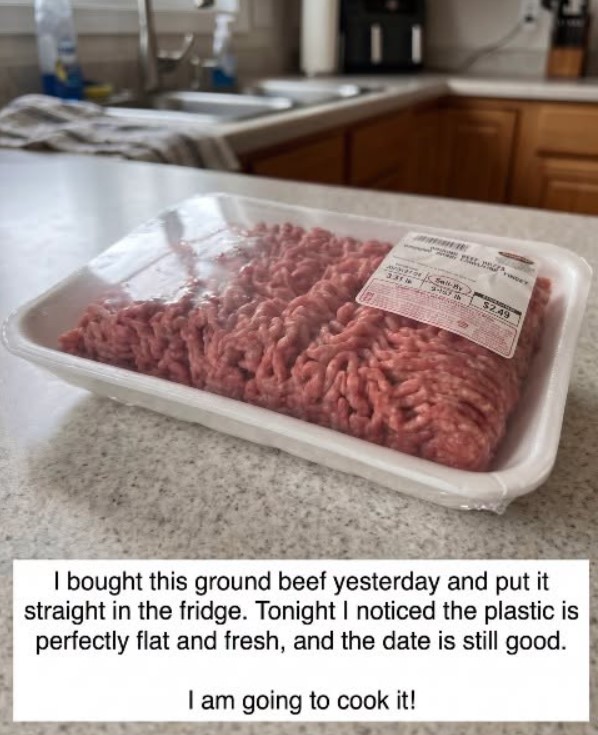
Have you ever reached into the refrigerator and noticed that a package of meat, cheese, vegetables, or another food product looks strangely puffed up or bloated? Maybe the plastic is stretched tightly, the container looks inflated, or a package that was once flat now resembles a small balloon.
Your first thought may be that the food has gone bad. But is a swollen package always dangerous?
Not necessarily. Some foods are deliberately packaged with gases that help protect the product, preserve freshness, or prevent the food from being crushed during transportation. Modified-atmosphere packaging, for example, can replace some of the oxygen inside a package with gases such as carbon dioxide or nitrogen. This can make certain packages appear somewhat inflated even when the food is safe.
However, unexpected or abnormal swelling can also be a warning sign of spoilage. Microorganisms can produce gases as they grow, causing a package to expand. With certain foods—particularly improperly processed canned or preserved foods—swelling can be associated with potentially dangerous contamination.
That’s why it’s important to understand the difference between packaging that is intentionally designed to contain gas and packaging that has become swollen because something has gone wrong.
Why Does Food Packaging Become Bloated?
There are several possible reasons a food package may look inflated.
The most important distinction is whether the swelling was intentional or happened unexpectedly after packaging.
Manufacturers sometimes use controlled or modified atmospheres to help extend shelf life. Oxygen can accelerate chemical deterioration and microbial spoilage, so food producers may adjust the gases inside a package to help maintain quality.
On the other hand, microorganisms can also generate gases while breaking down food. When those gases accumulate inside a sealed package, the package may become increasingly swollen.
This means that the appearance of the package alone doesn’t always tell the whole story.
What Is Modified-Atmosphere Packaging?
Modified-atmosphere packaging, often abbreviated as MAP, is a food-packaging technique in which the air surrounding the food is changed before the package is sealed.
Instead of leaving ordinary atmospheric air inside, manufacturers may introduce gases such as nitrogen or carbon dioxide. The goal can be to slow deterioration, preserve texture, maintain appearance, or protect the food during storage and transportation.
For example, certain meats, cheeses, salads, and other refrigerated foods may be packaged using controlled gas mixtures.
Because these gases take up space inside the package, some products may naturally look somewhat puffed.
Is Intentional Puffiness Safe?
If the package was designed to contain gas, a certain amount of puffiness can be completely normal.
The key is knowing what the product is supposed to look like. If you regularly purchase a particular food and its packaging has always been slightly inflated, that may simply be part of the manufacturer’s packaging method.
The concern arises when the package looks significantly different from normal or develops swelling that wasn’t expected.
When Is Bloated Packaging a Warning Sign?
Unexpected swelling deserves caution.
If a package that normally lies flat suddenly becomes tightly inflated, don’t assume that it is harmless simply because the expiration date hasn’t passed.
Food can spoil before its printed date if it has been improperly stored, exposed to excessive temperatures, or contaminated during processing or handling.
According to food-safety guidance, abnormal swelling can sometimes result from microorganisms producing gas inside the package. Some of those microorganisms may simply cause spoilage, while others can potentially cause illness.
When the packaging looks dramatically different from what you normally see, it’s better to investigate carefully rather than taking a chance.
Swollen Cans Are Especially Concerning
A swollen can should be treated very differently from a bag of chips that is intentionally filled with air or a refrigerated food package designed for modified-atmosphere packaging.
The USDA advises consumers not to use swollen cans because swelling can be associated with contamination or spoilage organisms, including Clostridium botulinum.
The same caution applies to cans that are leaking, badly damaged, or otherwise abnormal.
Commercial canning is designed to make food safe through carefully controlled processing. If the integrity of the container is compromised or the food has been improperly processed, harmful microorganisms can potentially survive or grow.
Why Botulism Is Mentioned
One of the major reasons food-safety authorities take swollen cans seriously is botulism.
Botulism is a rare but potentially life-threatening illness caused by toxins produced by Clostridium botulinum. The bacteria can grow in low-oxygen environments under certain conditions, including some improperly processed or preserved foods.
This doesn’t mean that every swollen food package contains botulinum toxin. It doesn’t.
However, because botulism can be extremely serious and contaminated food may not always look or smell obviously spoiled, food-safety authorities recommend taking suspicious containers seriously.
The USDA specifically advises consumers not to taste food from containers that are leaking, bulging, swollen, damaged, or otherwise abnormal.
Never Taste Suspicious Food to “Check” It
This is one of the most important rules to remember.
If you encounter a swollen, leaking, or otherwise suspicious package, don’t take a small bite to see whether it tastes okay.
Some dangerous food contaminants cannot be reliably detected by taste or smell. In the case of botulinum toxin, even a very small amount can cause severe illness.
When food packaging gives you a reason to suspect contamination, tasting it isn’t worth the risk.
What About Vacuum-Sealed Meat?
Vacuum-sealed meat can sometimes create confusion because vacuum packaging is designed to remove air from the package.
USDA explains that vacuum packaging removes air and can help preserve food, while modified-atmosphere packaging can use gases such as carbon dioxide or nitrogen.
A properly packaged product may therefore look different from ordinary packaging.
However, if a vacuum-sealed package becomes unusually swollen, leaks, loses its expected seal, or otherwise appears abnormal, it’s best to treat that as a warning rather than assuming the change is harmless.
This is especially true for highly perishable refrigerated foods.
What About Cheese?
Some cheeses are intentionally packaged using modified atmospheres, so mild puffiness isn’t necessarily an indication that the cheese has spoiled.
Still, a package that suddenly becomes dramatically inflated can indicate microbial activity.
Pay attention to whether the product looks different from the same brand and type of cheese you’ve purchased previously.
Also check the package for leaks, broken seals, unusual liquid, mold that isn’t expected for that particular cheese, or an unpleasant odor.
If several warning signs appear together, don’t take a chance.
What About Yogurt and Other Dairy Products?
Unexpectedly swollen dairy containers deserve caution.
Certain dairy products can develop gas as microorganisms multiply, which may cause containers to bulge or lids to become unusually tight.
If a yogurt container, cream package, or other refrigerated dairy product looks dramatically swollen when it normally isn’t, it is better to discard it or return it to the retailer rather than assuming it is safe.
This is especially important if the food has also been stored above the recommended temperature.
A Puffed Bag Isn’t Always a Bad Thing
Not every inflated food bag is a warning sign.
For example, snack foods such as potato chips are often packaged with additional gas to cushion the fragile contents and help protect them from being crushed.
In these cases, the puffiness is intentional.
This is an excellent example of why you should consider the type of food and its normal packaging before deciding that swelling automatically means spoilage.
The question isn’t simply, “Is the package inflated?”
Instead, ask:
“Is this package supposed to be inflated?”
Check the Date—but Don’t Rely on It Alone
Expiration dates, best-by dates, and use-by dates can provide useful information, but they aren’t a guarantee that food is safe.
A product can deteriorate before the printed date if it was improperly refrigerated, damaged, contaminated, or exposed to unfavorable conditions.
Likewise, some foods can remain safe beyond a best-by date if they have been properly stored and the packaging remains intact.
When evaluating an unusual package, consider the date together with the condition of the packaging and the storage history.
Look for Other Warning Signs
Swelling is only one possible indication that something may be wrong.
Before deciding what to do with questionable food, look for other signs such as:
- Leaking liquid
- Broken seals
- Punctures or holes
- Cracked containers
- Unusual discoloration
- Unexpected mold
- Strong or unpleasant odors
- Liquid or foam spurting when opened
- A can that is bulging at the ends
- A lid that appears loose or unusually raised
The USDA and CDC specifically identify leaking, bulging, swollen, damaged, or abnormal containers as reasons to discard suspicious food.
What Should You Do With a Suspicious Package?
If you encounter food with unexplained swelling, don’t open it simply to investigate.
For canned foods or other products that may pose a botulism risk, official guidance recommends disposing of suspicious containers without tasting the contents. The USDA advises placing suspect canned foods in tightly closed bags and disposing of them in appropriate trash outside the home so that children and pets cannot access them.
For ordinary refrigerated packaged foods, you may also choose to return the product to the store if you purchased it recently.
If you’re uncertain, throwing away a questionable food is generally a much better choice than risking foodborne illness.
What If the Package Is Only Slightly Puffy?
This is where judgment becomes important.
A slightly puffed package may be completely normal if the product is intentionally packaged that way. Some products are expected to contain gases for preservation or protection.
But if the product normally has flat packaging and this particular package is noticeably inflated, don’t ignore the difference.
Compare it with other packages of the same product if you’re shopping in a store. If every package has the same appearance, the puffiness may be part of the packaging design.
If only one package is dramatically swollen, damaged, or leaking, choose another package.
What Happens When Bacteria Produce Gas?
Some microorganisms consume nutrients in food and release gases as metabolic byproducts.
Inside a sealed package, those gases have nowhere to escape. As pressure builds, the plastic, lid, or container can expand.
This is one reason swelling can be a visible sign of spoilage.
However, not every gas-producing microorganism is equally dangerous, and not every swollen package means the same thing. That’s why food type, packaging method, storage conditions, and other signs all matter.
Why Temperature Control Matters
Improper temperature control can make food spoil more quickly.
Perishable foods should be kept at the appropriate refrigerated temperature, and foods that have been left too warm for too long can become unsafe even if their packaging looks normal.
A swollen package combined with a history of inadequate refrigeration should be treated especially cautiously.
The problem isn’t necessarily the swelling alone. It may be a visible consequence of conditions that have allowed microorganisms to multiply.
Don’t Assume Cooking Will Fix Everything
It’s tempting to think that if questionable food is cooked thoroughly, it will automatically become safe.
That’s not a reliable strategy.
Certain toxins can remain a concern even when ordinary cooking kills many bacteria. Botulinum toxin, for example, is a serious concern associated with improperly processed foods.
This is why food-safety authorities recommend discarding suspicious swollen containers rather than trying to rescue their contents by cooking them.
What About Home-Canned Food?
Home-canned foods deserve particular attention.
The CDC explains that safe home canning requires appropriate processing methods, especially for low-acid foods. Improperly processed foods can provide conditions in which C. botulinum spores survive and later produce toxin.
Signs such as bulging lids, leaking jars, or abnormal appearance should never be ignored.
If you’re unsure whether home-canned food was processed safely, the CDC’s advice is straightforward: when in doubt, throw it out.
How to Reduce the Risk of Food Spoilage
You can reduce the chance of food developing problems by following a few basic habits.
Keep Refrigerated Foods Cold
Store perishable foods according to the temperature recommendations on the packaging.
Don’t Ignore Damaged Packaging
If a package is punctured, leaking, severely crushed, or swollen unexpectedly, choose another product.
Follow Canning Instructions Carefully
For home preservation, use tested recipes and appropriate processing methods rather than relying on guesswork.
Check Food Before Buying It
When shopping, inspect cans, jars, pouches, and refrigerated packages before placing them in your cart.
Store Food Correctly at Home
Even properly packaged food can deteriorate if it is stored under inappropriate conditions.
What You Should Remember at the Grocery Store
The next time you see a puffy food package, don’t automatically panic—but don’t automatically ignore it either.
First, think about whether the product is normally packaged with air or gas.
If the answer is yes, some puffiness may be completely intentional.
If the product normally has a tight vacuum seal or flat packaging and suddenly appears swollen, be more cautious.
And if you’re dealing with a bulging can, leaking container, damaged seal, or suspicious home-canned food, the safest choice is to leave it alone and discard it rather than opening or tasting it.
Conclusion :
Bloated food packaging can be confusing because not all puffiness means the same thing. Some foods are intentionally packaged with gases that help preserve quality, protect delicate products, or extend shelf life. Modified-atmosphere packaging is a common example, and a certain amount of inflation can be perfectly normal.
But unexpected swelling can also be a warning that microorganisms are producing gas inside the package. This is particularly important with canned, preserved, and highly perishable foods. Swollen or damaged cans can potentially indicate serious contamination, and food-safety authorities strongly advise against opening or tasting suspicious containers.
The safest approach is to look at the whole picture. Consider the type of food, the normal appearance of its packaging, the storage conditions, the expiration or best-by date, and any additional warning signs such as leaking, unusual odors, damaged seals, or discoloration.
Most importantly, never taste questionable food just to determine whether it is safe. If a package looks seriously abnormal and you cannot confidently explain why, throwing it away is a small price to pay for protecting yourself and your family.
A little awareness can go a long way. Once you know that some bloated packaging is intentional while other swelling can signal spoilage, you’ll be much better equipped to make smart decisions the next time you encounter a suspicious-looking package in your refrigerator or at the grocery store.