Think about the last meal you prepared at home. Maybe it was a comforting bowl of soup, a hearty stew, roasted vegetables, grilled meat, or a simple dish made with whatever ingredients you had available. No matter what you were cooking, there was probably one familiar ingredient you reached for almost automatically.
For many people, seasoning is what turns an ordinary meal into something memorable. A small amount of garlic can add richness, chili can bring heat, fresh herbs can brighten a dish, and a single bay leaf can quietly add depth while everything simmers.
But if you had to choose just one must-have seasoning or flavoring for your kitchen, which would you pick?
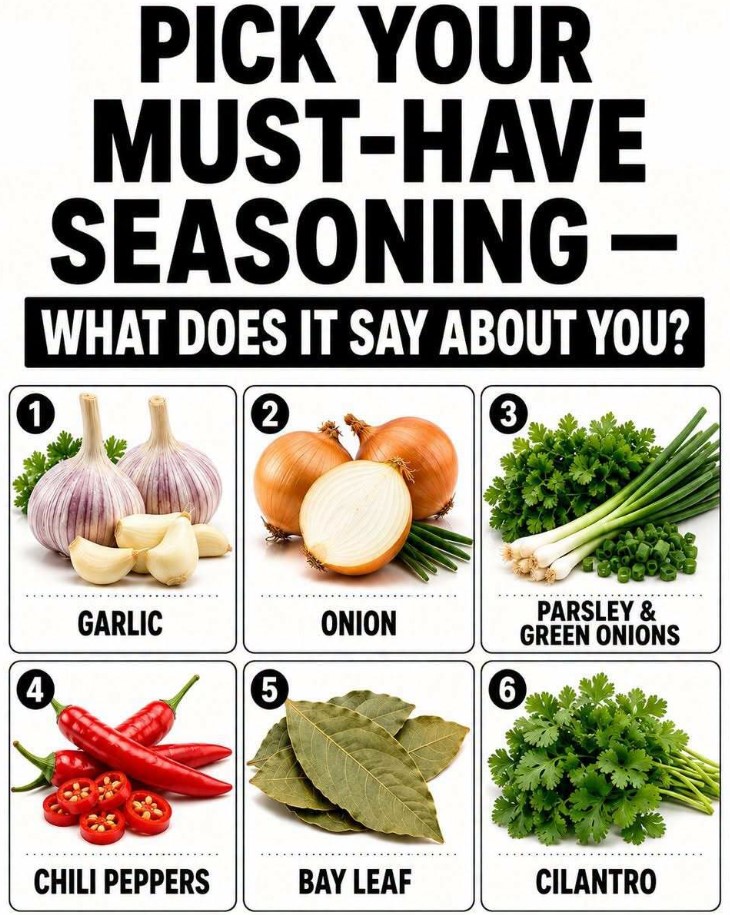
Take a look at the six choices in this fun personality-style food challenge:
Garlic, onion, parsley and green onions, chili peppers, bay leaf, or cilantro.
There is no wrong choice. Your favorite may simply reveal something about the flavors you naturally enjoy and the way you approach cooking.
1. Garlic
Garlic is one of those ingredients that seems to find its way into almost everything.
Whether it is finely chopped into a sauce, mixed into a marinade, added to vegetables, stirred into soup, or roasted until soft and golden, garlic has an incredible ability to make food more flavorful.
Its raw flavor can be sharp, intense, and unmistakable. But cooking garlic changes its character dramatically. When exposed to heat, it becomes softer and sweeter, losing some of the aggressive bite associated with fresh garlic.
There is also a fascinating reason freshly chopped or crushed garlic has such a powerful aroma. Crushing garlic allows certain compounds to interact and form allicin, a sulfur-containing compound associated with garlic’s characteristic smell and pungent flavor.
And then there is roasted garlic.
Slowly roasting garlic transforms the cloves into something completely different. They become creamy, mellow, slightly sweet, and spreadable. You can mix roasted garlic into mashed potatoes, spread it onto bread, stir it into sauces, or use it to add richness to vegetables.
If You Picked Garlic…
You probably appreciate bold flavor and ingredients that can make a noticeable difference without requiring complicated preparation.
Garlic lovers often enjoy food that is aromatic, savory, and comforting. You may also be the type of cook who believes that even a simple meal deserves plenty of flavor.
2. Onion
Onions may be one of the most ordinary ingredients in your kitchen, but their versatility is almost impossible to beat.
They can be eaten raw, sautéed, roasted, grilled, caramelized, pickled, or slowly cooked into soups and sauces.
Raw onion has a strong, sharp character that can add a satisfying bite to salads, sandwiches, tacos, and other dishes. But heat changes the onion completely.
As onions cook slowly, their texture becomes softer and their flavor becomes sweeter and deeper. The natural sugars and other compounds inside the onion undergo changes during cooking, creating the rich flavor we associate with beautifully caramelized onions.
Onions can also form the foundation of countless recipes. They can be the starting point for a soup, stew, sauce, curry, casserole, or skillet meal.
In other words, onions may not always be the star of a dish, but they are often doing important work behind the scenes.
If You Picked Onion…
You probably appreciate versatility and dependable ingredients.
You may enjoy traditional comfort foods, homemade meals, and recipes where several flavors slowly come together. You also understand that sometimes the most basic ingredients are the ones that make the biggest difference.
3. Parsley & Green Onions
If you selected parsley and green onions, you may prefer fresh, lighter flavors that give a dish a little extra energy.
Parsley is often used as a finishing herb because its fresh taste can balance heavier or richer foods. A small handful sprinkled over pasta, potatoes, soup, grilled meat, or vegetables can make a dish look and taste brighter.
Green onions offer a gentle onion flavor without being quite as intense as many mature onions. They can be sliced over salads, noodles, rice dishes, soups, eggs, potatoes, and countless other meals.
Together, parsley and green onions make an excellent finishing combination.
They can add color, freshness, aroma, and texture without overwhelming the main ingredients.
Sometimes you don’t need another complicated sauce or elaborate ingredient. A little chopped herb or fresh onion on top can be enough to make a plate feel more complete.
If You Picked Parsley & Green Onions…
You may be someone who appreciates balance.
You probably don’t want one powerful flavor to dominate your entire meal. Instead, you may enjoy fresh ingredients that complement the main dish and make everything feel lighter and more inviting.
You might also have an eye for presentation. After all, a simple sprinkle of fresh green herbs can make an ordinary meal look considerably more appetizing.
4. Chili Peppers
For anyone who loves spicy food, chili peppers aren’t simply another ingredient. They can be an essential part of the meal.
Chili peppers can add warmth, intensity, and excitement to everything from sauces and soups to grilled foods, curries, marinades, and stir-fries.
The sensation of heat comes primarily from compounds known as capsaicinoids, with capsaicin being the best-known example.
Interestingly, capsaicin doesn’t actually raise the temperature of your mouth. Instead, it interacts with receptors that detect heat and irritation, causing your brain to interpret the sensation as burning.
That explains why a very spicy pepper can make you feel as though your mouth is on fire even though the food itself hasn’t become physically hotter.
And not every chili provides the same level of heat. There are countless varieties, ranging from relatively mild peppers to extremely fiery ones.
This gives chili lovers plenty of opportunities to experiment.
If You Picked Chili Peppers…
You may enjoy excitement, intensity, and strong flavors.
You’re probably not afraid to experiment with your food, and you may be the person at the dinner table asking for “just a little more heat.”
You might also enjoy trying new cuisines because spicy ingredients appear in dishes from many different culinary traditions around the world.
5. Bay Leaf
Bay leaf is perhaps the quietest choice on this list.
Unlike garlic, onion, or chili peppers, you don’t normally notice bay leaves immediately when you taste a dish. In fact, you usually add them during cooking and remove them before serving.
So why use them?
Bay leaves can contribute a subtle herbal and earthy character to foods that simmer for a long time. They are commonly used in soups, stews, sauces, braised dishes, and other slow-cooked recipes.
The flavor isn’t supposed to overpower everything else.
Instead, bay leaf works in the background, adding another layer of aroma and helping the overall flavor profile feel more rounded.
One important thing to remember is that you shouldn’t expect a single bay leaf to completely transform a meal. Its contribution is generally subtle, especially compared with stronger ingredients such as garlic or chili.
But subtle doesn’t mean unimportant.
Sometimes the ingredients that work quietly in the background are what help bring everything together.
If You Picked Bay Leaf…
You may appreciate subtlety and patience.
You probably understand that good cooking isn’t always about making one ingredient stand out. Sometimes the best results come from allowing several flavors to develop slowly and complement one another.
You may also enjoy traditional soups, stews, sauces, and slow-cooked meals where flavor develops gradually.
6. Cilantro
Cilantro is easily one of the most controversial choices on the list.
People tend to have strong opinions about it.
Some describe cilantro as fresh, bright, citrusy, and pleasantly herbal. Others experience its flavor very differently and describe it as unpleasant or even soapy.
And there is a scientific reason why some people may experience cilantro differently.
Certain genetic variations can influence how people detect particular aroma compounds found in cilantro. This means that the same herb can taste deliciously fresh to one person while tasting completely different to someone else.
That makes cilantro an especially interesting choice.
It is also incredibly versatile. Fresh cilantro can be used in salads, salsas, soups, rice dishes, sauces, tacos, curries, and many other recipes.
If You Picked Cilantro…
You may enjoy distinctive flavors and aren’t afraid of ingredients that divide opinions.
You might also be someone who likes experimenting with different cuisines and trying combinations that other people might not immediately consider.
And if you absolutely cannot stand cilantro, don’t worry. You’re certainly not the only one.
So, Which Seasoning Would You Choose?
Now that you’ve seen all six choices, take another look:
1. Garlic
Bold, aromatic, savory, and incredibly versatile.
2. Onion
Dependable, adaptable, and capable of becoming sweet and deeply flavorful when cooked.
3. Parsley & Green Onions
Fresh, bright, colorful, and perfect for finishing a dish.
4. Chili Peppers
Spicy, energetic, and ideal for anyone who loves a little excitement.
5. Bay Leaf
Subtle, earthy, aromatic, and especially useful in slow-cooked meals.
6. Cilantro
Fresh, distinctive, and famously loved by some and disliked by others.
Which one would you miss the most if you suddenly couldn’t use it?
Your Favorite Seasoning Says More Than You Think
Choosing a favorite seasoning isn’t exactly a scientific personality test, but it can be a fun way to think about your personal relationship with food.
Our preferences are often influenced by what we grew up eating, the meals we associate with home, the cuisines we enjoy, and the way we learned to cook.
Someone who grew up eating heavily seasoned dishes may naturally reach for garlic, onions, or chili peppers. Someone who enjoys lighter meals may prefer fresh herbs. Another person might love slow-cooked comfort food and appreciate the subtle contribution of bay leaves.
There is no correct answer.
Food is personal, and the ingredients we rely on often become part of our cooking identity.
Try Something Different
If your favorite choice wasn’t the one you expected, why not experiment?
If you’re usually a garlic person, try using more fresh herbs. If you always reach for chili, experiment with milder varieties and different levels of heat. If bay leaves are your favorite, try incorporating them into a slow-cooked soup or stew.
Cooking becomes much more interesting when you allow yourself to explore.
You don’t need to completely change your favorite flavors. Sometimes simply trying an ingredient in a different way can help you discover something new.
Final Thoughts :
Seasonings may seem like small additions, but they can have an enormous impact on the way a meal tastes.
Garlic can bring richness and aroma. Onions can create a savory foundation. Parsley and green onions can add freshness. Chili peppers can provide heat and excitement. Bay leaves can quietly build depth in slow-cooked dishes. Cilantro can contribute a distinctive freshness that people either love or strongly dislike.
The best part is that every choice has its own personality.
So take another look at the six options and ask yourself one final question:
If you could keep only one of these in your kitchen, which one would you choose?
There is no wrong answer. Your favorite seasoning may simply be the flavor that makes your food feel most like home.
And once you’ve made your choice, share the challenge with someone who loves cooking. Ask them to pick their must-have seasoning too—you might be surprised by how different their answer is!