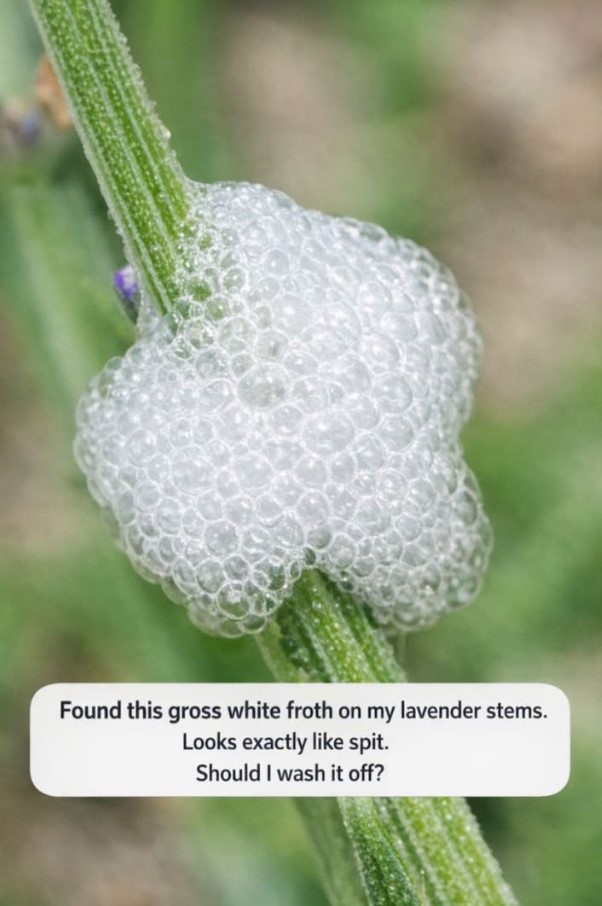
You head into the garden expecting to admire your healthy lavender plants, only to spot a strange patch of white, bubbly foam clinging to the stems. At first glance, it looks like someone actually spit on your plants, and your first instinct is probably to grab the hose and wash it away. While it certainly looks unpleasant, this mysterious froth is actually a common sight in many gardens and usually isn’t a reason to panic.
The foamy substance is often called “cuckoo spit” or “spittle,” and it’s created by the immature stage of an insect known as the spittlebug. Understanding what it is, why it’s there, and whether you should remove it can help you keep your garden healthy without unnecessary worry.
What Is the White Foamy Substance?
Despite its appearance, the froth isn’t saliva at all. It’s a protective foam produced by young spittlebugs, also called nymphs. After hatching from eggs laid on plants, these tiny insects feed on plant sap and surround themselves with bubbles that they create by mixing plant fluids with air.
The resulting foam forms a moist shelter that keeps the insects hidden from predators while protecting them from drying out in the sun. It also helps regulate temperature, allowing the nymphs to continue developing safely until they mature into adults.
Why Do Spittlebugs Like Lavender?
Lavender is just one of many plants that spittlebugs may choose as a temporary home. These insects are attracted to a wide range of garden plants, including herbs, ornamental flowers, shrubs, grasses, and even vegetables.
Lavender’s sturdy stems provide an excellent place for the protective foam to cling, making it easy for the insects to remain hidden while feeding.
Are Spittlebugs Harmful?
The good news is that spittlebugs rarely cause serious damage to healthy plants. Although they feed by drawing small amounts of sap from stems, established plants usually tolerate this feeding with little or no noticeable harm.
In most home gardens, the white foam is more of a cosmetic issue than a real threat. Healthy lavender plants continue to grow, bloom, and thrive even if a few spittlebugs are present.
However, extremely large populations could place extra stress on young or already weakened plants, making monitoring worthwhile.
Should You Wash the Foam Off?
In many cases, there’s no urgent need to remove the froth. If it doesn’t bother you, the insects will eventually mature and leave on their own.
If you prefer a cleaner-looking garden or notice a large number of foamy patches, you can gently spray the stems with a stream of water from your garden hose. This removes the protective foam and exposes the insects, making them more vulnerable to natural predators.
Avoid using a high-pressure spray that could damage delicate stems or flowers.
Should You Use Insecticides?
For most gardeners, insecticides are unnecessary.
Because spittlebugs typically cause minimal damage, chemical treatments often do more harm than good by affecting beneficial insects like bees, ladybugs, butterflies, and other pollinators that help maintain a healthy garden ecosystem.
Simple physical removal is usually more than enough if you wish to reduce their numbers.
Natural Ways to Manage Spittlebugs
If you regularly notice spittlebugs in your garden, several gentle methods can help keep their population under control.
Encourage Beneficial Wildlife
Birds, spiders, lacewings, and other beneficial insects naturally prey on many garden pests. Creating a diverse garden with flowering plants and natural habitats helps attract these helpful allies.
Inspect Plants Regularly
Check stems, especially during spring and early summer, when young spittlebugs are most active. Early detection makes removal quick and easy.
Maintain Healthy Plants
Well-watered, properly fertilized plants are generally better able to tolerate occasional insect feeding without suffering long-term effects.
Remove Heavy Infestations by Hand
If only a few stems are affected, simply wipe away the foam with a gloved hand or rinse it off with water.
Can the Foam Spread Disease?
Unlike some garden pests, spittlebugs found in many home gardens are not typically associated with widespread plant disease. While certain species in specific regions can carry plant pathogens, the average gardener usually encounters harmless populations that simply feed temporarily before moving on.
Keeping your plants healthy and observing them regularly is the best approach.
Other Plants That May Develop “Cuckoo Spit”
You may notice similar white foam on:
- Rosemary
- Mint
- Sage
- Roses
- Daisies
- Strawberries
- Sunflowers
- Grasses
- Wildflowers
- Many ornamental shrubs
Finding it on multiple plants isn’t unusual during the growing season.
Common Myths About the White Foam
Many gardeners mistake the froth for fungal disease, mold, or even snail slime. In reality, it is none of these.
The foam isn’t poisonous, won’t harm people who touch it, and isn’t a sign that your plant is dying. It simply serves as a temporary shelter for developing insects.
When Should You Be Concerned?
While most cases are harmless, you may want to investigate further if you notice:
- Large numbers of affected plants throughout the garden.
- Significant yellowing or wilting unrelated to weather.
- Severe stunted growth.
- Additional signs of insect infestations.
In these situations, the issue may involve more than just spittlebugs, and a closer inspection of overall plant health is worthwhile.
Conclusion :
Discovering strange white foam covering your lavender stems can certainly be surprising, especially if you’ve never encountered it before. Fortunately, what looks like an unpleasant mystery is usually nothing more than the temporary home of a young spittlebug. Although the bubbly mass may appear alarming, it rarely causes serious harm to healthy plants and is considered a normal part of the garden ecosystem in many regions.
For most gardeners, there’s no need to reach for harsh pesticides or worry that their lavender is in danger. A simple rinse with water is enough if you prefer to remove the foam, while leaving it alone is also a perfectly acceptable option in many cases. Healthy plants are generally more than capable of tolerating the insects until they complete their life cycle.
The best approach is to view your garden as a living environment where beneficial insects, pollinators, and even a few harmless pests all play a role. Regular inspections, good watering habits, and proper plant care will do far more for your lavender than aggressive chemical treatments ever could.
So the next time you notice what appears to be mysterious “spit” on your plants, you’ll know exactly what’s happening. Instead of feeling concerned, you can confidently identify the foam as a fascinating example of nature’s ingenuity and make an informed decision about whether to leave it in place or gently wash it away. Either way, your lavender will likely continue rewarding you with beautiful blooms, fragrant foliage, and a healthy growing season.