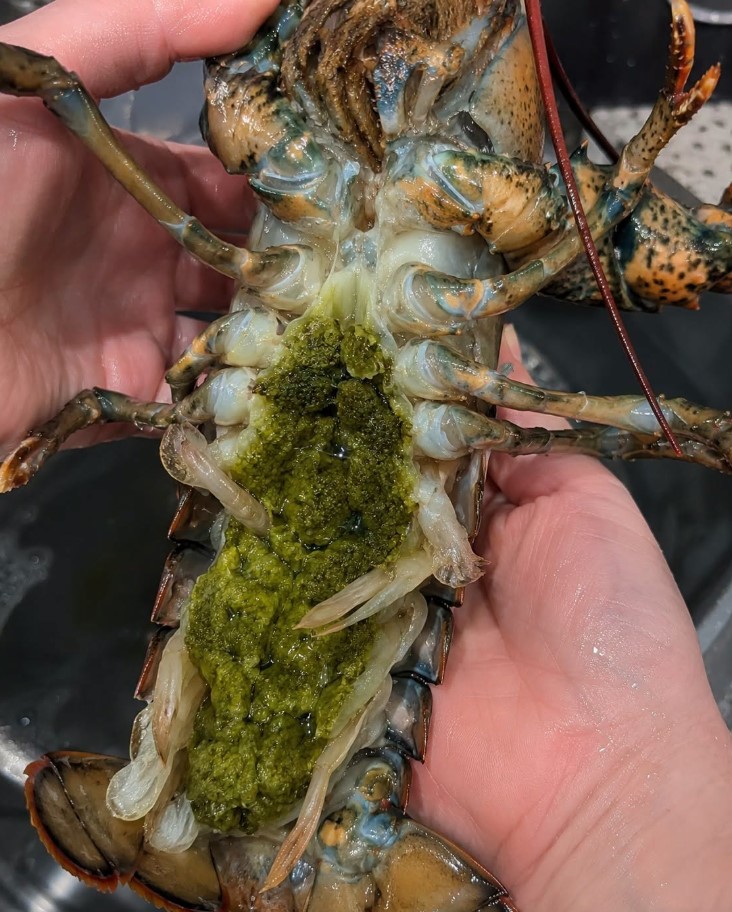
If you’ve ever cracked open a freshly cooked lobster and discovered a soft, green substance tucked inside its body, you may have paused before taking another bite. Many first-time lobster eaters assume something is wrong with the seafood, while seasoned seafood lovers often debate whether it’s a delicacy or something that should be discarded. Its unusual appearance has sparked countless questions around dinner tables and seafood markets alike.
The truth is that this mysterious green material has a name, a purpose, and an interesting story. Understanding what it is can help you decide whether you want to enjoy it, remove it, or simply appreciate another fascinating detail about one of the ocean’s most popular shellfish.
What Is the Green Substance Inside a Lobster?
The green material found inside a lobster is commonly called the tomalley. It serves as both the lobster’s liver and pancreas, performing many of the same essential functions these organs carry out in other animals.
Tomalley helps digest food, stores nutrients, and filters substances from the lobster’s body. Because of its role, it naturally has a soft, creamy texture and a distinctive green color that can vary depending on the lobster’s diet and environment.
Why Is It Green?
The color comes from pigments found in the lobster’s food, which includes algae, seaweed, small fish, mollusks, and other marine organisms.
Depending on what the lobster has been eating, the tomalley may appear:
- Bright green
- Olive green
- Yellow-green
- Brownish green
These color variations are completely normal and don’t necessarily indicate freshness or quality.
Is Tomalley Safe to Eat?
Many people enjoy eating tomalley and describe its flavor as rich, buttery, and intensely “ocean-like.” It has long been considered a delicacy in many coastal communities and is sometimes mixed into sauces, seafood spreads, soups, or lobster dishes to add extra depth of flavor.
However, there is an important consideration.
Because tomalley functions as the lobster’s filtering organ, it can accumulate environmental contaminants that may be present in ocean waters. For this reason, some food safety agencies recommend limiting or avoiding consumption of tomalley, especially in areas where contamination levels may be higher.
If you’re unsure about the source of your lobster, many people simply choose to enjoy the meat while leaving the tomalley behind.
Why Do Some Chefs Love It?
Professional chefs often appreciate tomalley because of its concentrated seafood flavor.
In small amounts, it can be blended into:
- Seafood bisques
- Lobster butter
- Pasta sauces
- Compound butters
- Seafood stocks
- Rich dipping sauces
Its creamy consistency makes it an excellent natural thickener while adding a bold lobster flavor.
Does Every Lobster Have It?
Yes. Every healthy lobster contains tomalley because it is an essential internal organ.
The amount may vary depending on factors such as:
- The lobster’s size
- Age
- Diet
- Overall health
- Season of the year
Larger lobsters often contain a more noticeable amount.
What About the Bright Red Eggs?
Sometimes people confuse tomalley with another substance found inside female lobsters.
Bright red or dark black clusters are lobster roe, also known as coral. Before cooking, the eggs appear dark green or nearly black. During cooking, they transform into a vibrant red or orange color.
Unlike tomalley, the roe is the lobster’s eggs and is considered a delicacy in many cuisines.
Can Cooking Change the Color?
Cooking has little effect on the tomalley’s green color. While its texture may become slightly firmer, it generally remains green after steaming, boiling, grilling, or baking.
If you notice slight color differences, they’re usually caused by the lobster’s natural diet rather than the cooking method.
How Can You Tell If It’s Spoiled?
Fresh tomalley should have a smooth, creamy consistency and a clean marine aroma.
Discard the lobster if you notice:
- A sour or rotten smell
- Slimy or unusually watery texture
- Mold or discoloration beyond normal green shades
- Signs that the lobster itself has spoiled
When in doubt, it’s always safest to avoid eating questionable seafood.
Nutritional Value
Tomalley contains several nutrients, including:
- Protein
- Healthy fats
- Vitamins
- Minerals
- Omega-3 fatty acids
However, because it is also relatively high in cholesterol and may accumulate contaminants, it is generally best enjoyed only occasionally, if at all.
Common Myths About Lobster Tomalley
Several misconceptions surround this unusual part of the lobster.
One common myth is that the green substance is waste or partially digested food. In reality, it is a functioning organ that helps process nutrients, not the lobster’s digestive waste.
Another misconception is that green always means the lobster has gone bad. Fresh tomalley is naturally green, and its color alone isn’t an indication of spoilage.
Some people also believe that every lobster contains the exact same amount of tomalley, but this varies naturally from one lobster to another.
Should You Eat It or Throw It Away?
There isn’t one universal answer.
Many seafood enthusiasts happily enjoy tomalley for its unique flavor and culinary tradition. Others prefer not to eat it due to food safety recommendations or simply because they don’t enjoy its appearance or taste.
Ultimately, it’s a personal choice based on your preferences and comfort level.
Conclusion :
Finding a green, creamy substance inside your lobster can certainly be surprising if you’ve never seen it before, but in most cases, it’s simply the tomalley—the organ responsible for digestion and nutrient storage. While its appearance may seem unusual at first, it has been appreciated by seafood lovers for generations and remains a prized ingredient in many coastal kitchens around the world.
At the same time, it’s important to understand that tomalley serves as the lobster’s filtering organ, which means it can accumulate environmental contaminants depending on where the lobster lived. Because of this, many health authorities advise moderation or recommend avoiding it altogether, particularly if the lobster comes from waters with known pollution concerns. Knowing where your seafood comes from and following local food safety guidance can help you make the best decision.
Whether you choose to savor the tomalley as a gourmet treat or simply remove it before enjoying the sweet, tender lobster meat, there’s no need to be alarmed when you encounter it. The more you learn about how lobsters live and how their bodies function, the less mysterious this green “goodie” becomes. Instead of viewing it as something strange, you can appreciate it as another fascinating reminder that nature often hides remarkable surprises beneath the surface.