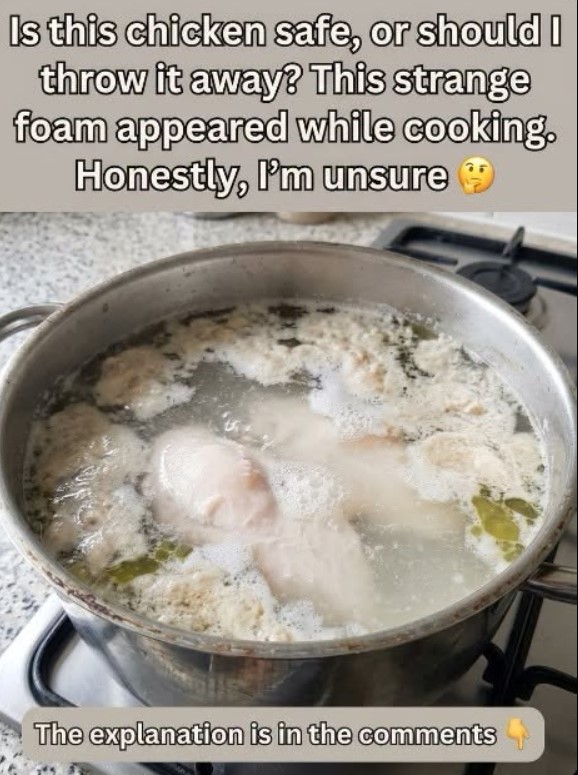
Have you ever put chicken in a hot skillet, oven, or air fryer and noticed something unexpected happening?
Instead of simply browning beautifully, the chicken suddenly starts releasing a strange white liquid that bubbles and gathers around the meat. Sometimes it looks almost like foam, and if you have never seen it before, it can be surprisingly alarming.
You might immediately wonder: Is the chicken spoiled? Is that fat? Is it some kind of chemical? Did something go wrong during cooking?
Fortunately, that strange white foam is often much less mysterious than it looks.
Chicken naturally contains water and proteins, and when the meat is exposed to heat, those components change and move toward the surface. When the released liquid begins bubbling in a hot pan, it can create the familiar white, foamy appearance.
So while it may not look particularly appetizing, the appearance of white foam does not automatically mean that your chicken is bad.
What Is the White Foam on Chicken?
The white foam that appears while chicken cooks is generally made up of moisture, dissolved proteins, and other components naturally present in the meat.
Chicken contains a considerable amount of water. It also contains a variety of proteins that help give the meat its structure. As the chicken heats up, some of that moisture is released while the proteins begin changing their structure.
Those ingredients can collect on the surface of the chicken or in the liquid surrounding it. As the liquid gets hot and starts bubbling, the combination can produce a white, frothy substance.
In other words, what you are seeing is usually a normal part of the cooking process rather than something mysterious appearing from nowhere.
The amount can vary considerably from one package of chicken to another. One piece may release only a small amount of cloudy liquid, while another may produce noticeably more foam.
Why Does the Foam Turn White?
The answer has a lot to do with what heat does to proteins.
Raw chicken proteins are not always visibly white in the same way they appear after cooking. When exposed to heat, their structure changes. This process is known as denaturation.
One of the proteins involved is myosin. As the chicken heats, myosin and other proteins change their structure and can become opaque.
You can think of a similar process when cooking an egg.
A raw egg white is relatively translucent, but once heated, it becomes solid and white. Chicken proteins undergo comparable changes when exposed to cooking temperatures.
As moisture and proteins are released from the meat, they can collect in the pan. The heat causes the liquid to bubble, and the proteins can make the liquid look cloudy or foamy.
That is why the white material may become especially noticeable when chicken is cooked in a pan containing some moisture.
Is White Foam on Chicken Normal?
In many cases, yes.
Seeing a white, protein-rich liquid or foam around chicken while it cooks does not, by itself, mean that the meat has spoiled.
This distinction is important because the appearance of chicken is not a reliable way to determine whether raw poultry is safe.
A piece of chicken can look perfectly normal and still require proper handling and thorough cooking. Conversely, white foam appearing during cooking is not automatically evidence that something is wrong with the meat.
Instead of judging safety based solely on the foam, consider the chicken’s storage conditions, packaging, freshness, and any obvious signs of spoilage.
Most importantly, cook poultry to a safe internal temperature. The USDA recommends cooking all poultry, including chicken pieces and ground poultry, to an internal temperature of 165°F (73.9°C) measured with a food thermometer.
Why Does Some Chicken Produce More White Foam Than Others?
You may notice that one package of chicken produces almost no foam while another seems to release a surprising amount.
That difference does not necessarily indicate that one package is bad.
Several factors can affect how much liquid and foam you see during cooking.
Moisture Content
Chicken naturally contains water, and the amount of visible moisture released during cooking can vary.
Some commercially processed chicken products may also contain added water or solutions, depending on how the product was processed and what is stated on the label.
When there is more surface moisture available, more liquid may be released as the chicken heats.
That liquid can then collect in the cooking pan and produce more noticeable bubbling and foam.
Cooking Temperature
The cooking temperature can also influence what you see.
At a lower temperature, moisture may slowly collect around the chicken. At higher heat, that liquid can bubble more vigorously, making the foam much more noticeable.
This is one reason you might see a dramatic amount of bubbling when cooking chicken in a very hot skillet.
The cooking method matters, too. Chicken prepared in a skillet may look different from chicken cooked in an oven, air fryer, or covered dish.
The Cut of Chicken
Not every piece of chicken behaves the same way.
Chicken breasts, thighs, wings, and drumsticks have different amounts of fat, connective tissue, and muscle structure. Because of these differences, they may release different amounts of moisture during cooking.
A chicken breast may produce a different amount of visible liquid than a chicken thigh, even when both are fresh and prepared under similar conditions.
So comparing one package or cut with another based only on the amount of foam can be misleading.
Frozen or Previously Frozen Chicken
Frozen and previously frozen chicken can also behave differently during cooking.
Freezing affects the structure of meat, and when chicken is thawed, some moisture can be released. When that chicken is later cooked, the additional moisture may become more visible in the pan.
This can contribute to the cloudy liquid or foamy appearance you notice while cooking.
Again, seeing more liquid does not automatically mean the chicken is spoiled.
Does White Foam Mean Chicken Is Spoiled?
Not necessarily.
The white foam itself is not a reliable spoilage test.
Instead, look at the chicken as a whole and consider how it was stored and handled. If the packaging is damaged, leaking, or otherwise compromised, that deserves attention. You should also pay attention to obvious signs that the meat may no longer be fresh.
However, it is important not to confuse normal cooking changes with spoilage.
Chicken naturally changes appearance when heated. Proteins become opaque, moisture is released, and the juices can become cloudy. These changes are part of cooking.
The safest approach is to follow proper food-handling practices and use a thermometer rather than trying to determine safety from appearance alone.
Don’t Rely on Color Alone
Many people use color as their main indicator of whether chicken is finished cooking.
For example, they may cut into the thickest part and look for completely white meat or clear juices.
Although appearance can provide useful information about cooking, it is not the most reliable way to confirm that chicken has reached a safe temperature.
The USDA specifically recommends using a food thermometer because it provides a much more dependable measurement of internal temperature. Poultry should reach 165°F (73.9°C) internally.
That means the presence or absence of white foam should not determine whether you continue cooking the chicken.
Instead, check the temperature at the thickest part of the meat without touching bone when possible.
What Should You Do When You See White Foam?
There is usually no need to panic simply because a white substance appears around your chicken.
If the chicken is being cooked normally and the foam appears as the meat releases moisture, you can continue cooking it according to your recipe.
If you are cooking chicken in a skillet, the released liquid may collect around the pieces. Depending on your recipe, you can allow some of that moisture to evaporate so the chicken has an opportunity to brown.
If your goal is crispy, browned chicken, excessive moisture can interfere with browning because the meat may spend more time steaming in its own juices.
However, this is primarily a cooking-quality issue rather than evidence that the chicken is unsafe.
For food safety, the key step is still reaching the recommended internal temperature.
What About the Liquid Around the Chicken?
The liquid that collects around chicken can look unpleasant, especially when it becomes cloudy or white.
But cloudy cooking juices are not necessarily a sign of contamination.
As chicken heats, water, proteins, and other natural components are released from the meat. Those substances mix together in the pan and can change the appearance of the liquid.
Heat can also cause proteins to become opaque, which helps explain why the liquid may look white or grayish rather than clear.
The appearance can become even more dramatic when the liquid is bubbling rapidly.
Why Does It Sometimes Look Like Soap?
One of the strangest things about this phenomenon is its appearance.
The foam can form small bubbles that look surprisingly similar to soap suds. That can understandably make people wonder whether something unusual was added to the chicken.
In most ordinary cooking situations, however, the foamy appearance can be explained by the combination of moisture, proteins, and heat.
The bubbles are simply part of the physical changes taking place as the liquid heats and moves around the pan.
What looks unusual is not necessarily unusual in terms of food chemistry.
Should You Remove the White Foam?
Whether you remove it is largely a matter of cooking preference.
If there is a lot of foam or liquid in the pan and you want the chicken to brown, you may prefer to remove excess liquid or allow it to cook away.
Some cooks also skim off cloudy material when preparing certain dishes because they want a cleaner-looking broth or sauce.
But removing the foam is not what makes chicken safe.
Proper handling and adequate cooking temperature are much more important.
If you are cooking chicken for a meal, focus on reaching the safe internal temperature rather than trying to eliminate every trace of white material.
The Most Important Chicken Safety Step
Regardless of whether your chicken produces foam, liquid, or almost nothing at all, safe cooking remains the priority.
The USDA recommends cooking poultry to a minimum internal temperature of 165°F (73.9°C) as measured with a food thermometer. This applies to whole poultry, chicken pieces, and ground poultry.
A thermometer is particularly useful because chicken can sometimes look done before it has reached the recommended temperature.
Likewise, chicken can remain slightly pink in some situations even after reaching a safe temperature, so color alone should not be your only guide.
Using a thermometer takes much of the guesswork out of the process.
A Strange Appearance Doesn’t Always Mean Something Is Wrong
Cooking often creates changes that look strange if you have never encountered them before.
Chicken releases moisture. Proteins change structure. Liquids become cloudy. Bubbles form. Surfaces change color as browning develops.
All of these things can happen during an ordinary cooking process.
The white foam is one of those visual changes that can make people stop and wonder what they are seeing.
Once you understand that heated chicken can release moisture and proteins, the phenomenon becomes much less mysterious.
Final Thoughts
The next time you see that strange white foam bubbling around your chicken, don’t immediately assume that the meat has gone bad.
In many cases, the foam is simply the result of water and proteins being released from the chicken as it heats. As those proteins change structure and the liquid begins bubbling, the mixture can become cloudy and foamy.
The amount you see can vary depending on the chicken’s moisture content, the cut of meat, whether it was frozen or previously frozen, and how it is being cooked.
Most importantly, the foam itself is not a reliable test of whether chicken is safe to eat.
Instead, pay attention to proper storage and handling, follow the product’s instructions, and use a food thermometer when cooking. For poultry, the USDA recommends reaching an internal temperature of 165°F (73.9°C).
So, although that white foam may look strange the first time you notice it, there is often a perfectly ordinary explanation behind it. What appears to be something alarming may simply be the visible result of chicken’s natural moisture and proteins reacting to heat.