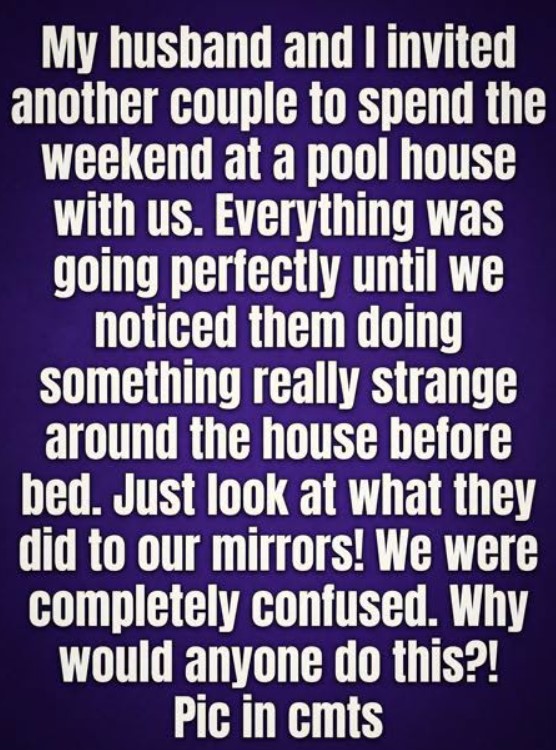
Have you ever walked into a dark bedroom, glanced at a mirror, and suddenly felt a little uneasy? You might have noticed your reflection out of the corner of your eye and wondered why something so familiar can seem strange after sunset.
For some people, covering a mirror before going to bed is a simple personal habit. For others, it is connected to family traditions, cultural customs, or spiritual beliefs that have been passed down through generations. Although the practice may seem unusual to someone who has never encountered it, mirrors have held a special place in folklore and everyday life for centuries.
But why do people cover mirrors at night? The reasons range from old superstitions to practical concerns about comfort and sleep. Understanding these explanations helps separate traditional beliefs from what we know about mirrors and human perception.
1. Cultural and Religious Traditions
One of the best-known reasons for covering mirrors is connected to mourning customs. In some communities, mirrors are covered when a family member dies, particularly during a period of mourning.
In Jewish tradition, for example, some families cover mirrors while sitting shiva, a seven-day mourning period following the death of a close relative. One common explanation is that mourners should focus on remembering the deceased and supporting one another rather than concentrating on their appearance.
Other explanations are rooted in religious interpretation and folklore. Some people believe mirrors can act as a connection between the physical world and the spiritual realm. These ideas have influenced different customs over time, although the precise origins and meanings vary.
It is important to understand that covering mirrors during mourning is not the same as covering them every night. The practice depends on the community, family, and tradition involved.
2. Spiritual Beliefs About Mirrors
Throughout history, mirrors have inspired stories about spirits, souls, and the unseen world. Because a mirror produces an image that looks like another version of reality, people in different cultures have sometimes regarded it as more than an ordinary household object.
Some traditional beliefs suggest that mirrors can act as doorways between worlds. Others hold that a spirit might become trapped in a reflection or that an uncovered mirror could attract unwanted spiritual attention.
In some families, these beliefs are connected specifically to nighttime. Parents or grandparents may teach children to cover bedroom mirrors before sleeping, explaining that doing so helps protect the household or keeps spirits away.
These stories can be fascinating, and they help explain why the habit continues in certain families. However, there is no reliable scientific evidence that mirrors attract ghosts, trap souls, or create supernatural danger at night.
For people who follow these customs, covering a mirror may nevertheless provide a sense of comfort, reassurance, or connection to their family heritage.
3. Why Mirrors Can Look Unsettling in the Dark
There is also a straightforward psychological explanation for why some people feel uncomfortable looking at mirrors at night.
During the day, a room is usually bright enough for us to recognize objects and faces easily. At night, however, lighting becomes weaker, shadows become more noticeable, and details are harder to distinguish.
Under these conditions, a reflection may appear less familiar than it does in daylight. A small movement, a passing shadow, or a change in lighting can briefly make the image seem surprising.
Our brains are constantly trying to interpret what we see. When visual information is limited, we may be more likely to misinterpret shadows or notice shapes that seem unusual. This is one reason an ordinary mirror can feel unsettling in a dark room.
The experience does not mean that anything supernatural is happening. It is a normal example of how lighting and perception can influence our feelings.
4. Reflections Can Create a Startling Effect at Night
Imagine waking up in the middle of the night and seeing movement in a mirror across the room. For a moment, you might wonder whether someone is standing nearby. After looking more carefully, you realize that you are seeing your own reflection or a shadow caused by a passing car outside.
Experiences like this can be startling, particularly when someone is tired or has just awakened from sleep.
Mirrors can also reflect light from streetlamps, headlights, televisions, and electronic devices. If the light changes suddenly, the reflection may change too, creating movement in the room without anything actually moving near the mirror.
Covering a mirror can eliminate these unexpected reflections. For someone who is easily startled at night, this small adjustment may make the bedroom feel more peaceful.
5. Creating a More Relaxing Bedroom
A bedroom should be a place where you can unwind and feel comfortable. If a large mirror reflects light or catches your attention while you are trying to sleep, covering it may be a simple way to make the room more relaxing.
Some people dislike seeing their reflection when they wake during the night. Others find that a mirror facing the bed makes the room feel visually busy or distracting.
There is no universal rule stating that mirrors must be covered before sleeping. What matters is how your bedroom environment affects your comfort.
If you find a mirror distracting, you could cover it with a lightweight cloth, adjust its angle, or move it to another wall if practical. You might also use curtains or blinds to reduce outside light that reflects across the room.
These are personal comfort choices rather than necessary safety measures.
6. Family Habits Passed Down Through Generations
Sometimes, people cover mirrors without knowing exactly where the practice originated.
A grandparent may have covered every mirror before bedtime, and the children in the household may have grown up doing the same. Over time, the action becomes part of the family’s nightly routine.
When people inherit a habit from someone they trust, they may continue it because it feels familiar or meaningful. The original explanation can become less important than the tradition itself.
This happens with many household customs, including avoiding certain activities at particular times, keeping specific objects in a room, or following routines believed to bring good fortune.
Not everyone who covers a mirror necessarily believes in ghosts or supernatural forces. Some people simply enjoy the ritual, respect their family’s customs, or prefer the appearance of a covered mirror at night.
7. Is It Necessary to Cover Mirrors Before Sleeping?
From a scientific and practical perspective, there is no general requirement to cover mirrors before going to bed. An ordinary household mirror does not become dangerous simply because the room is dark.
If you sleep comfortably with your mirror uncovered, there is no evidence-based reason to change your routine.
On the other hand, if a mirror makes you feel uneasy, reflects light into your eyes, or distracts you when you wake up, covering it is a perfectly reasonable personal choice.
You do not need to follow a superstition to make a small change that helps you feel more comfortable in your own bedroom. A simple cloth, a different mirror position, or a change in lighting may be enough.
The most important thing is to choose what works for you without feeling pressured by frightening stories or claims that have not been supported by evidence.
8. How to Make Your Bedroom Feel More Comfortable at Night
If nighttime reflections bother you, there are several easy ways to create a calmer sleeping environment.
Adjust the mirror’s position. If possible, angle it away from the bed so that it does not reflect your face or movements when you wake up.
Reduce unwanted light. Curtains or blinds can help prevent headlights and streetlights from creating unexpected reflections.
Use a cover if you prefer. A lightweight cloth can temporarily hide the mirror. Make sure the fabric is secured safely and kept away from candles, heaters, or other sources of heat.
Keep the room familiar. Avoid placing reflective objects where they might create confusing shadows in an otherwise dark space.
Develop a relaxing bedtime routine. Reading, listening to quiet music, or spending a few minutes unwinding before bed may help you feel more settled.
These simple adjustments can make a bedroom more comfortable without relying on supernatural explanations.
Frequently Asked Questions
Does covering a mirror at night prevent bad luck?
There is no scientific evidence that leaving a mirror uncovered at night causes bad luck. The belief appears in different forms of folklore, but it is not an established fact.
Why do some people avoid mirrors facing their beds?
Some people find reflections distracting or unsettling when they wake during the night. Others follow cultural or spiritual beliefs about mirror placement. There is no universal rule that a mirror must not face a bed.
Do mirrors attract spirits?
No reliable scientific evidence demonstrates that mirrors attract spirits or serve as supernatural doorways. Such ideas belong to folklore and spiritual traditions.
Why are mirrors covered after someone dies?
In some mourning traditions, mirrors are covered to shift attention away from personal appearance and toward grief, remembrance, and family support. Other explanations involve spiritual beliefs, and the meaning varies between communities.
Should I cover every mirror in my home?
No. There is no general requirement to cover mirrors at night. You can decide based on your comfort, preferences, and any traditions that are meaningful to you.
Conclusion :
The habit of covering mirrors at night has several possible explanations. For some people, it reflects cultural traditions or spiritual beliefs passed down through generations. For others, it is simply a practical way to avoid unexpected reflections, reduce distractions, or create a more relaxing bedroom.
Although stories about mirrors and the spirit world have fascinated people for centuries, there is no scientific evidence that an uncovered mirror creates supernatural danger. The uneasy feeling some people experience when looking at reflections in the dark can often be explained by shadows, limited lighting, and the way our brains interpret unfamiliar visual information.
Ultimately, covering a mirror before bed is a personal choice. If the habit brings you comfort or helps you sleep more peacefully, there is nothing wrong with continuing it. If you prefer to leave your mirrors uncovered, you can do that too.
Sometimes, a household habit carries a fascinating history even when its meaning differs from one family to another. Understanding that history allows us to appreciate the tradition without confusing folklore with established fact.