Finding a large beetle inside your home can be surprising, especially if you’ve never seen one before. With its fuzzy body, sturdy legs, and loud buzzing flight, this insect often looks far more intimidating than it really is. Many people immediately wonder whether it bites, damages homes, or signals a larger pest problem.
Fortunately, most of these beetles are harmless visitors that accidentally wander indoors during the warmer months. Learning to identify them can help you respond calmly and avoid unnecessary worry. In this guide, we’ll explain what this bug likely is, why it appears around homes, whether it’s dangerous, and the best way to handle the situation if you encounter one.
Meet the May Beetle (June Bug)
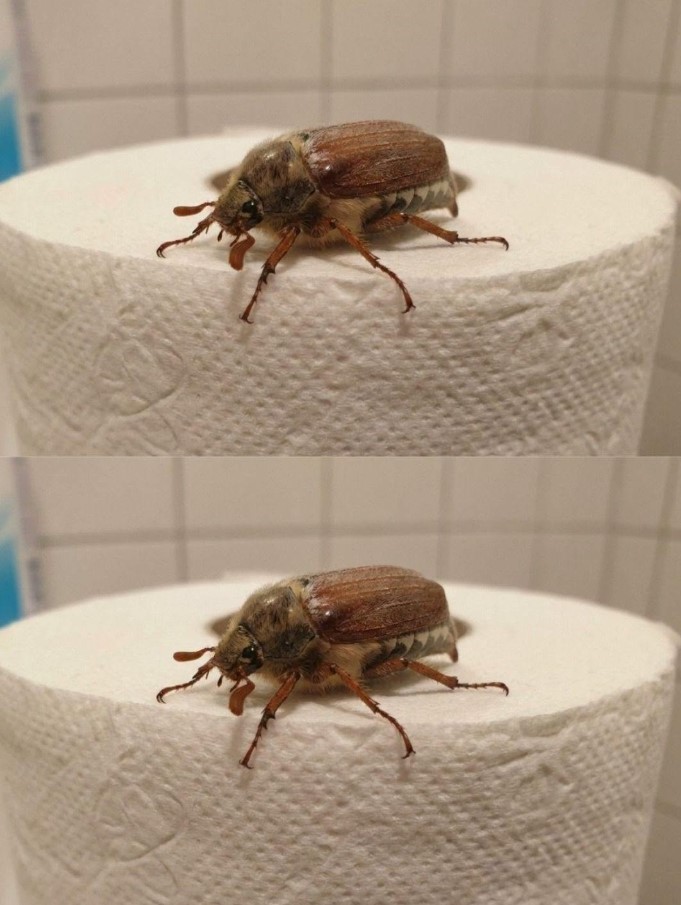
The insect shown in the photo closely resembles a May beetle, often called a June bug. These beetles belong to the scarab beetle family and are common throughout many parts of North America and Europe.
Adult May beetles typically measure between ½ and 1 inch long. They have:
- A hard, shiny brown shell.
- A fuzzy or hairy underside.
- Six strong legs with tiny claws.
- Antennae that help them locate food and mates.
- Wings hidden beneath their protective wing covers.
Although they may look intimidating because of their size, they are generally harmless to people.
Why Are They Suddenly Around Your House?
Adult May beetles emerge from the soil during late spring and early summer after spending years developing underground as larvae.
Several factors attract them to homes:
Outdoor Lighting
Like many nocturnal insects, May beetles are strongly attracted to porch lights, garage lights, and bright windows. They often fly toward artificial light at night and accidentally find their way indoors through open doors or windows.
Warm Weather
Warm evenings trigger their seasonal emergence. During this period, large numbers may appear for several weeks before their population naturally declines.
Nearby Trees and Lawns
Adult beetles feed on the leaves of hardwood trees, shrubs, and ornamental plants. Homes with mature landscaping often see more of these insects.
Moist Soil
Female beetles prefer laying eggs in soft, grassy soil where their larvae—commonly called white grubs—can feed on plant roots underground.
Are May Beetles Dangerous?
The good news is that these beetles are not considered dangerous to humans.
They do not:
- Bite people.
- Sting.
- Spread diseases.
- Damage furniture or clothing.
- Infest kitchens like cockroaches.
If one lands on you, it may cling with its tiny claws, which can feel surprising but is not harmful.
Why Do They Fly So Clumsily?
Many people notice that these beetles seem unusually awkward in flight.
They often:
- Crash into walls.
- Bounce off windows.
- Fly directly into porch lights.
- Land unexpectedly on people.
This isn’t aggression—they simply aren’t particularly graceful fliers. Their heavy bodies make controlled flight difficult, especially around bright lights.
Understanding Their Life Cycle
One reason these beetles appear every year is their unusually long life cycle.
Egg Stage
Females lay eggs several inches beneath the soil in lawns or gardens.
Larval Stage
The eggs hatch into white grubs, which live underground feeding on grass roots and organic matter. This stage can last two to four years depending on the species.
Pupa Stage
Once fully grown, the larvae transform into pupae inside the soil.
Adult Stage
Adults emerge during late spring or early summer to mate and reproduce. Their adult lives usually last only a few weeks.
Can They Harm Your Lawn?
Adult beetles usually cause only minor damage by feeding on leaves.
The real concern comes from their larvae.
White grubs feed on grass roots and can cause:
- Brown patches in lawns.
- Weak turf that pulls up easily.
- Increased visits from birds, raccoons, skunks, and moles digging for food.
Most healthy lawns tolerate a small grub population without problems. Treatment is generally only needed if grub numbers become excessive.
Why Did One Come Inside?
Finding a single beetle indoors is usually accidental.
It may have entered through:
- An open window.
- A garage door.
- A patio door.
- A torn window screen.
- A gap around exterior doors.
Seeing one or two beetles inside does not usually indicate an infestation.
What Should You Do If You Find One?
The simplest solution is to remove it safely.
You can:
- Place a cup or container over the beetle.
- Slide a stiff piece of paper underneath.
- Carry it outside and release it away from the entrance.
Avoid crushing the beetle indoors, as this can leave stains and attract other scavenging insects.
How to Prevent Them From Entering
If these beetles frequently appear around your home, a few simple measures can reduce the chances of them getting inside.
Reduce Outdoor Lighting
Switch off unnecessary lights during peak beetle season or use warm-colored LED bulbs that attract fewer insects.
Repair Screens
Inspect windows and doors for tears or gaps where insects can enter.
Seal Entry Points
Use weather stripping around doors and caulk small cracks around windows and utility openings.
Keep Doors Closed at Night
Many beetles enter simply because doors remain open while lights are on inside.
When Should You Be Concerned?
Occasionally seeing May beetles is perfectly normal.
However, you may want to investigate further if you notice:
- Large numbers entering the home every night.
- Significant lawn damage from white grubs.
- Dead patches of grass that lift easily from the soil.
- Increased digging by wildlife searching for grubs.
In those cases, inspecting your lawn for grub activity may be worthwhile.
Interesting Facts About May Beetles
These insects have several fascinating characteristics:
- Some species spend up to four years underground before emerging.
- Adult beetles survive only a few weeks.
- They are most active after sunset.
- Birds, bats, frogs, and many mammals feed on them.
- Their clumsy flying often makes them appear more frightening than they actually are.
- They play an important role in the food chain despite occasionally becoming lawn pests.
Common Myths
“They’re going to bite me.”
False. May beetles do not bite people.
“Finding one means my house is infested.”
Usually false. Most indoor sightings are isolated accidents.
“They’re poisonous.”
No. They are not poisonous or venomous.
“Every grub destroys lawns.”
Not necessarily. A healthy lawn can usually tolerate small grub populations without noticeable damage.
Final Thoughts
Finding a large brown beetle indoors can certainly be startling, but in most cases there’s no reason to panic. May beetles, or June bugs, are harmless seasonal insects that often wander toward lights and accidentally enter homes. While their underground larvae can sometimes affect lawns if populations become very high, adult beetles rarely pose any threat to people or property.
The best response is simple: identify the insect, gently move it back outdoors, and take a few preventative steps to reduce future visits. By understanding their life cycle and behavior, you can appreciate these fascinating insects for what they are—a temporary part of nature’s seasonal rhythm rather than a serious household pest.